THE TUG · LR110 RESTOMOD
POWERSHOW LR110 RESTOMOD · MARINE RESCUE
The Tug. Serious pull. Built for the hard jobs.
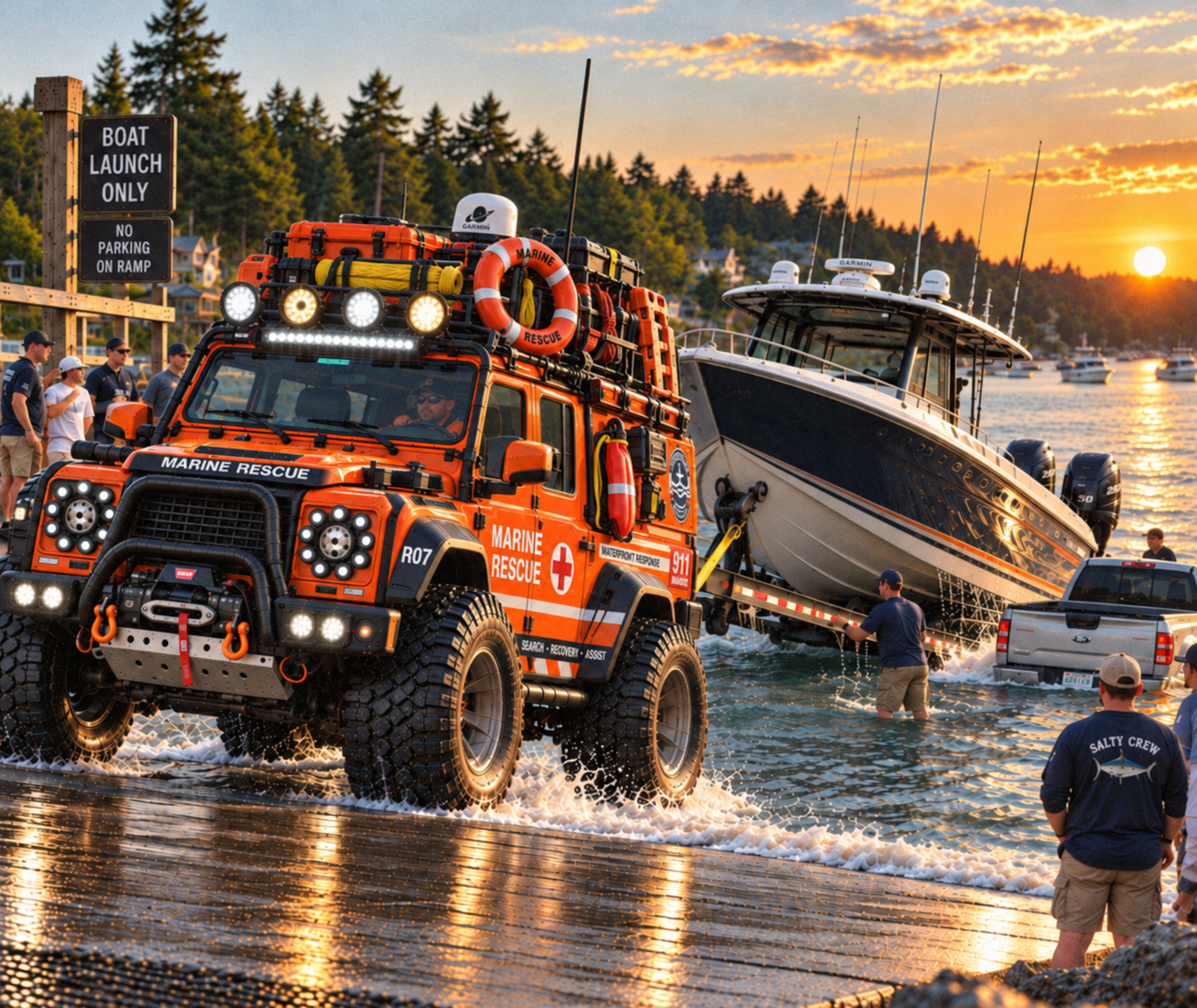
Meet the Tug, the PowerShow LR110 Restomod concept built around massive low-end torque, planted traction, and heavy recovery work. Start at the waterfront: a substantial boat, a wet launch ramp, and a job that calls for serious pulling muscle. This is exactly the kind of assignment that gave the Tug its name.
The bright orange marine version puts its working equipment in plain sight. Broad tires, a commanding stance, and substantial recovery hardware make the brief clear: keep the load moving and stay composed when the surface gets slippery. Four wheels, two axles, and a whole lot of attitude.
We wanted more than a truck that looks tough in a parking lot. the Tug’s design takes that strength into the places where it matters—launch ramps, snowbound roads, rough approaches, and demanding convoy work. Different assignments, the same obsession with usable pulling power.
PowerShow concept artwork. The scenes and design studies express a creative vision.
HEAVY RECOVERY
This is why we call it the Tug.
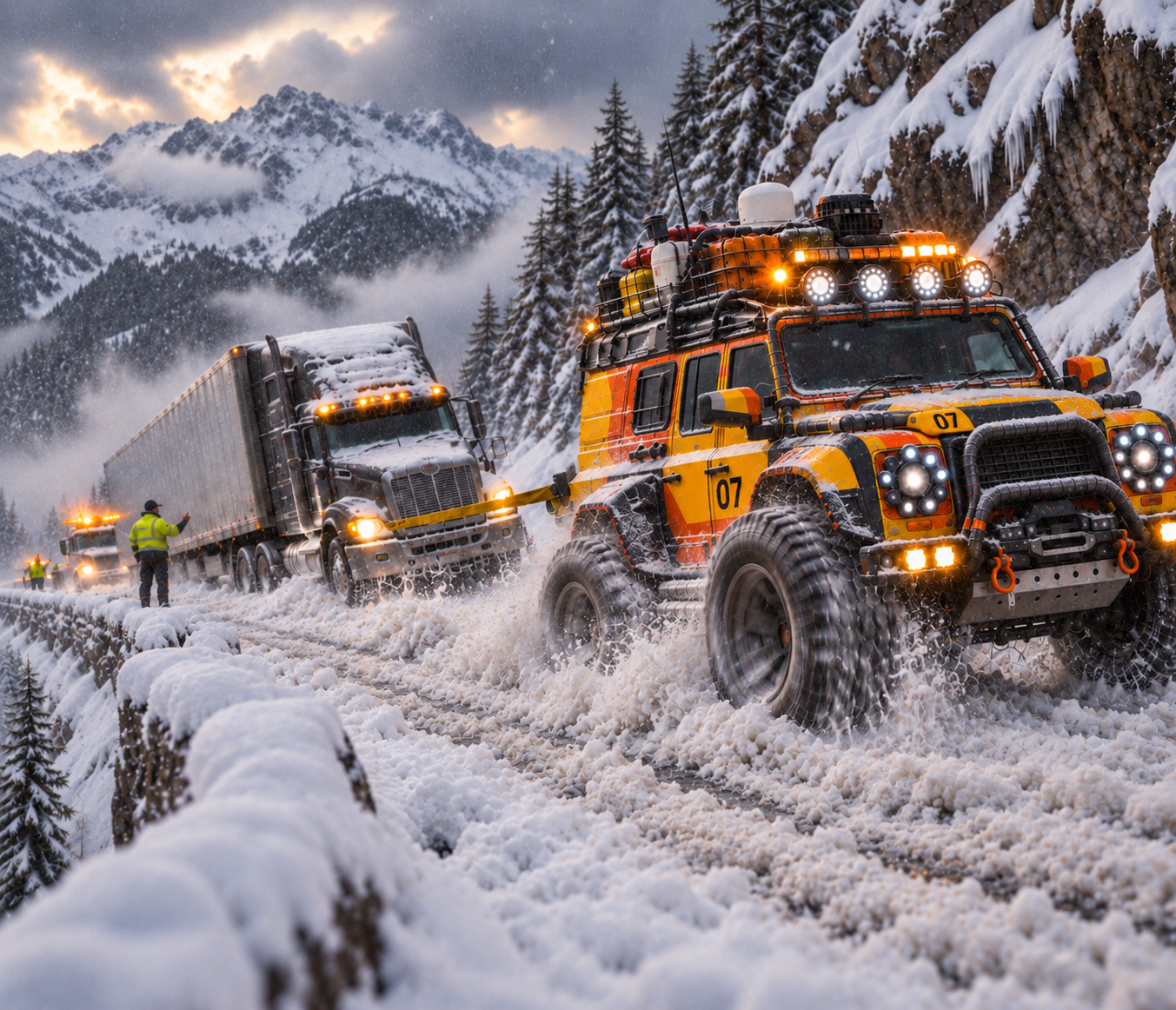
From the launch ramp to deep snow, the load only gets more demanding. A large stranded truck needs a way out, and the Tug steps into the pulling role. This is the assignment we had in mind when low-end torque became the heart of the concept.
The goal is controlled force under load. A broad stance, substantial tires, and purposeful recovery hardware give that idea a visible form. We wanted this scene to show a truck doing real work: taking up the strain, finding traction, and getting another vehicle moving. The nickname makes sense the moment you see the job.
TACTICAL DUTY
A working truck with real presence.
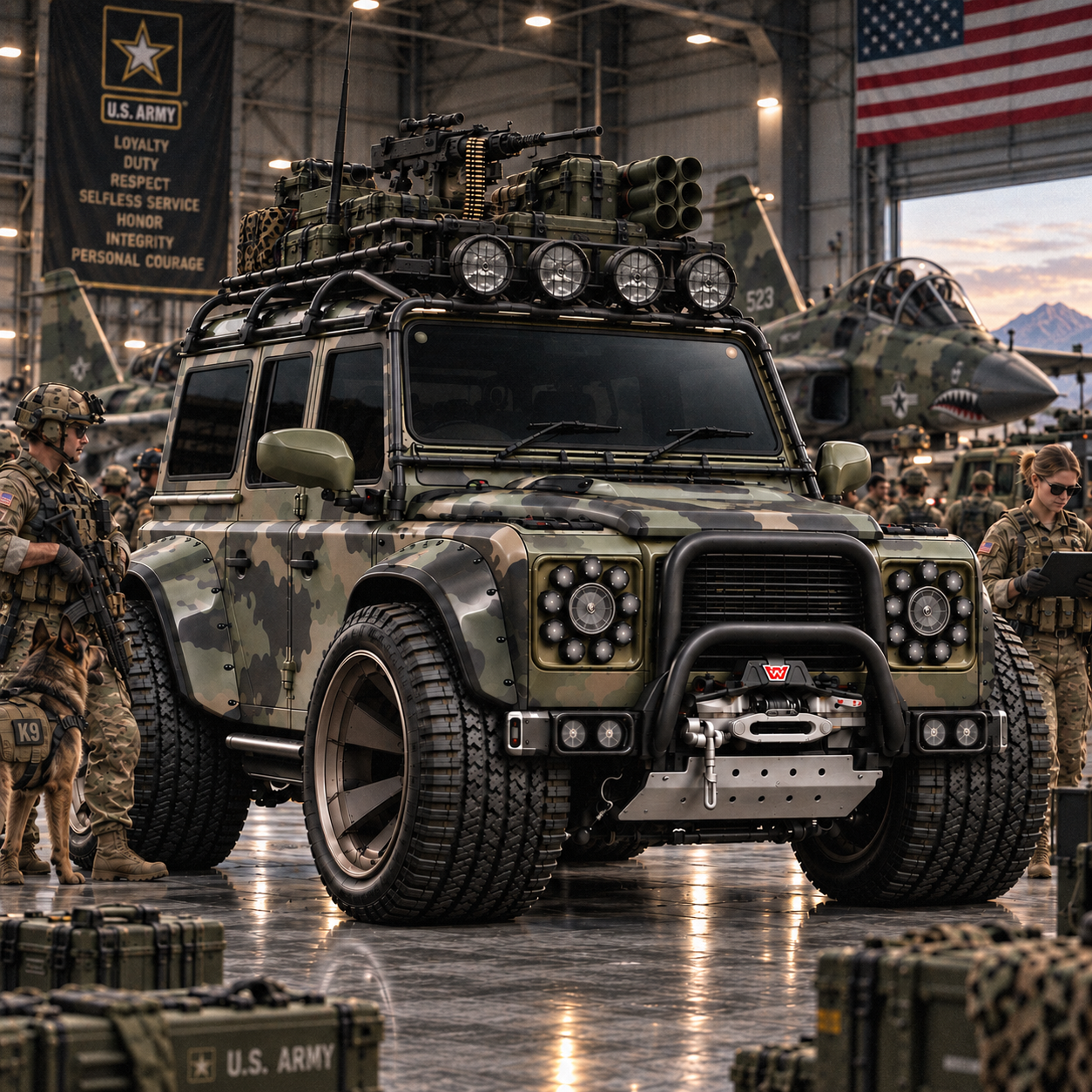
The hangar treatment gives the Tug a different uniform. Muted camouflage, dark wheels, organized roof equipment, and substantial recovery hardware pull the design toward heavy support work. Against aircraft and service vehicles, the truck still looks like it belongs in the middle of the activity.
This version explores the same pulling-power idea in a setting where equipment, access, and durability matter. It’s a truck imagined to carry a serious load and bring useful hardware along with it. The aggressive look follows that purpose, right down to the lower protection and the broad stance.
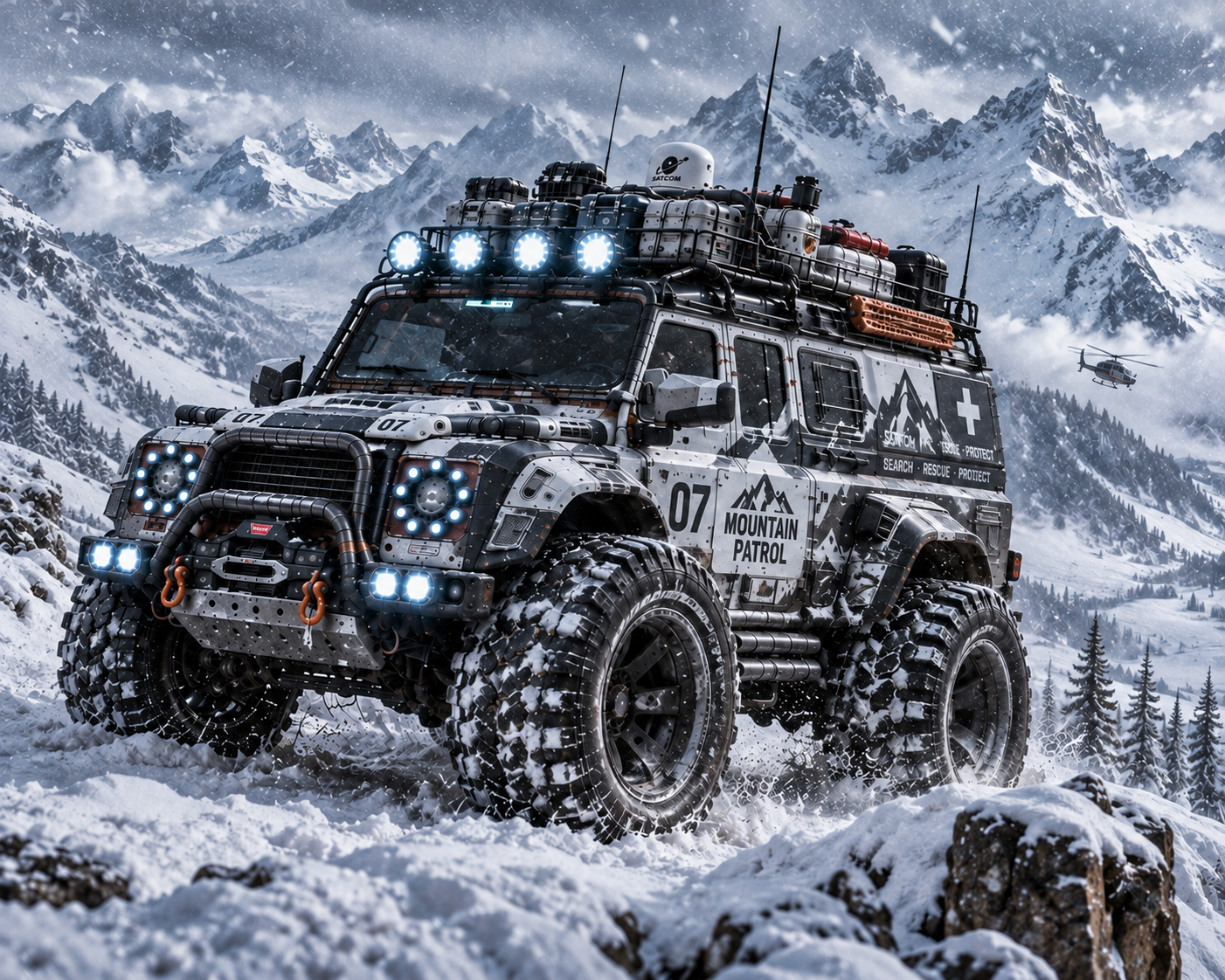
MOUNTAIN PATROL
Keep going when the road disappears.
A mountain road can change in a hurry. Fresh snow covers the ruts, the climb gets steeper, and the easy way through stops being obvious. This is the kind of day we pictured for the Tug: taking its time, finding a line, and keeping the gear close at hand.
The snow camouflage suits the setting, but it’s the tires and stance that draw your eye. There’s room beneath the truck to deal with uneven ground, and plenty of tread to dig into the climb. The recovery gear belongs here, too. Getting up the mountain is only half the job—you want a way to help out if someone else can’t keep moving.
That’s what makes this version fun to imagine. Pack warm clothes, bring a shovel, and allow more time than you think you’ll need. With the Tug, a snow day looks like a good reason to head out.
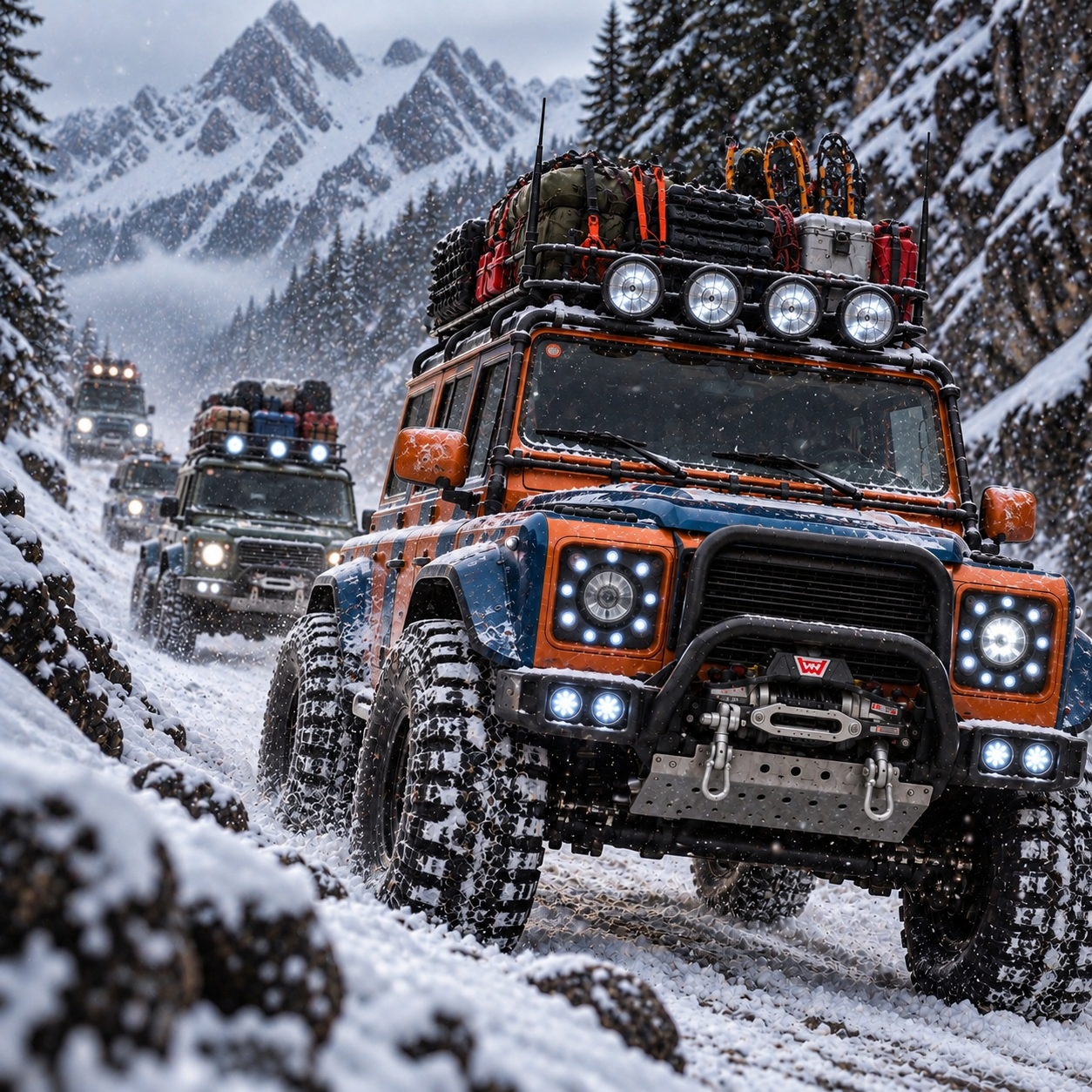
WINTER CONVOY
Big shoulders. A long way to go.
Orange bodywork cuts through the winter scene, with the rest of the group close behind. The convoy gives the Tug scale: this is a substantial machine carrying its gear into conditions that demand more from every tire, spring, and piece of equipment.
We wanted the image to feel heavy and active—the kind of drive where progress matters more than pace. Roof supplies, recovery tools, and a tough lower body turn the truck into a convincing centerpiece for the expedition. It carries the same authority as the VIP version, with snow taking the place of desert dust.
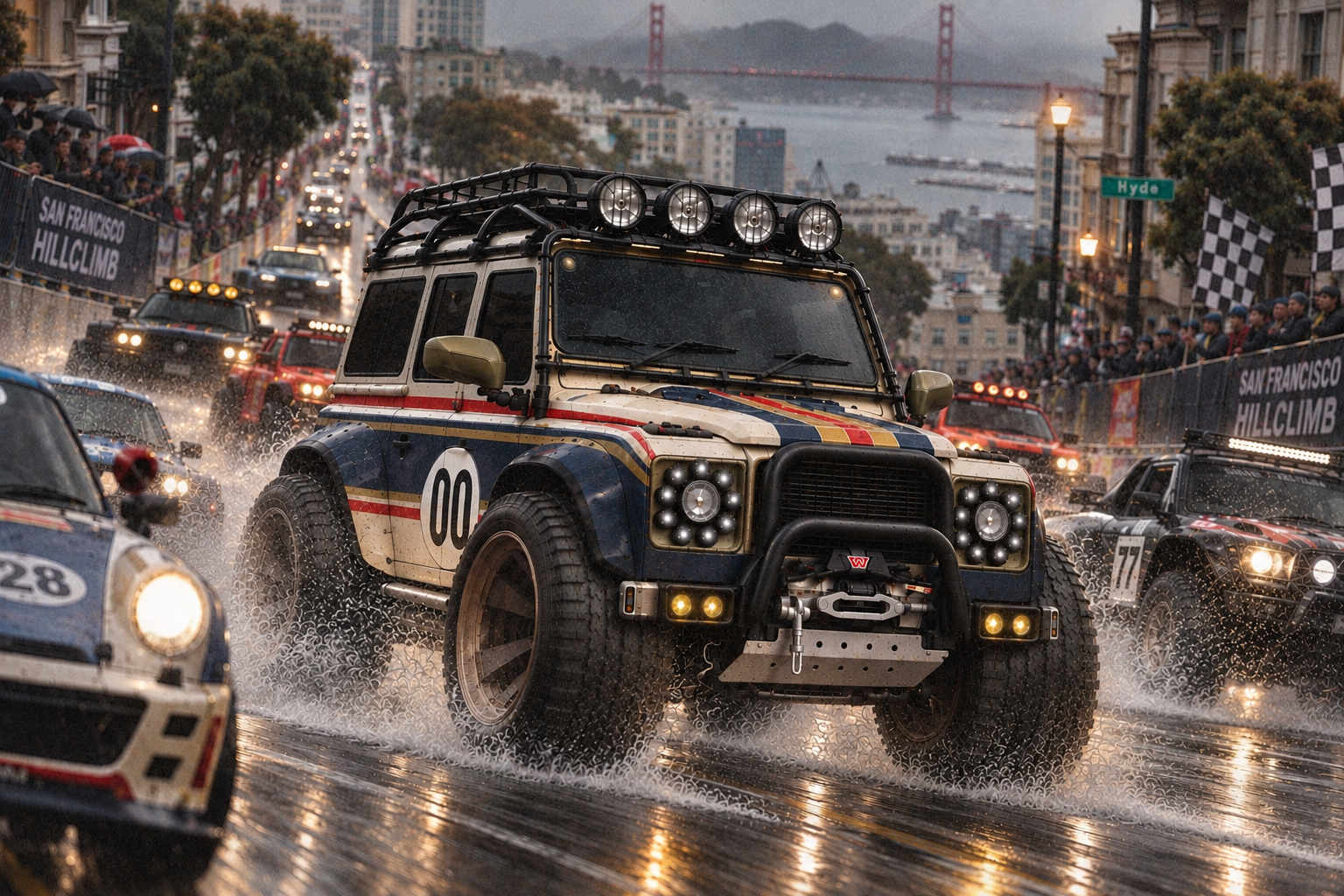
SAN FRANCISCO HILLCLIMB
All that torque. A different kind of climb.
Now put the Tug on a rain-soaked hill with rally cars all around it. Number 00 charges into the scene, throwing water off those big tires with the city and bay dropping away behind. The recovery truck has a competitive streak, and this is where we let it loose.
The same low-end punch that defines the pulling-power brief gives the hillclimb version its attitude. A steep grade, a wet surface, and a crowded field make traction and control the heart of the picture. The broad stance, substantial tire footprint, and tough front hardware keep the Tug recognizable even in full racing colors.
We stripped the roof load back and gave this version a red, blue, and cream competition treatment. It’s a change of pace for the series: the heavy-work character is still there, but this time the challenge is the climb itself. Big truck. Big presence. Absolutely up for it.
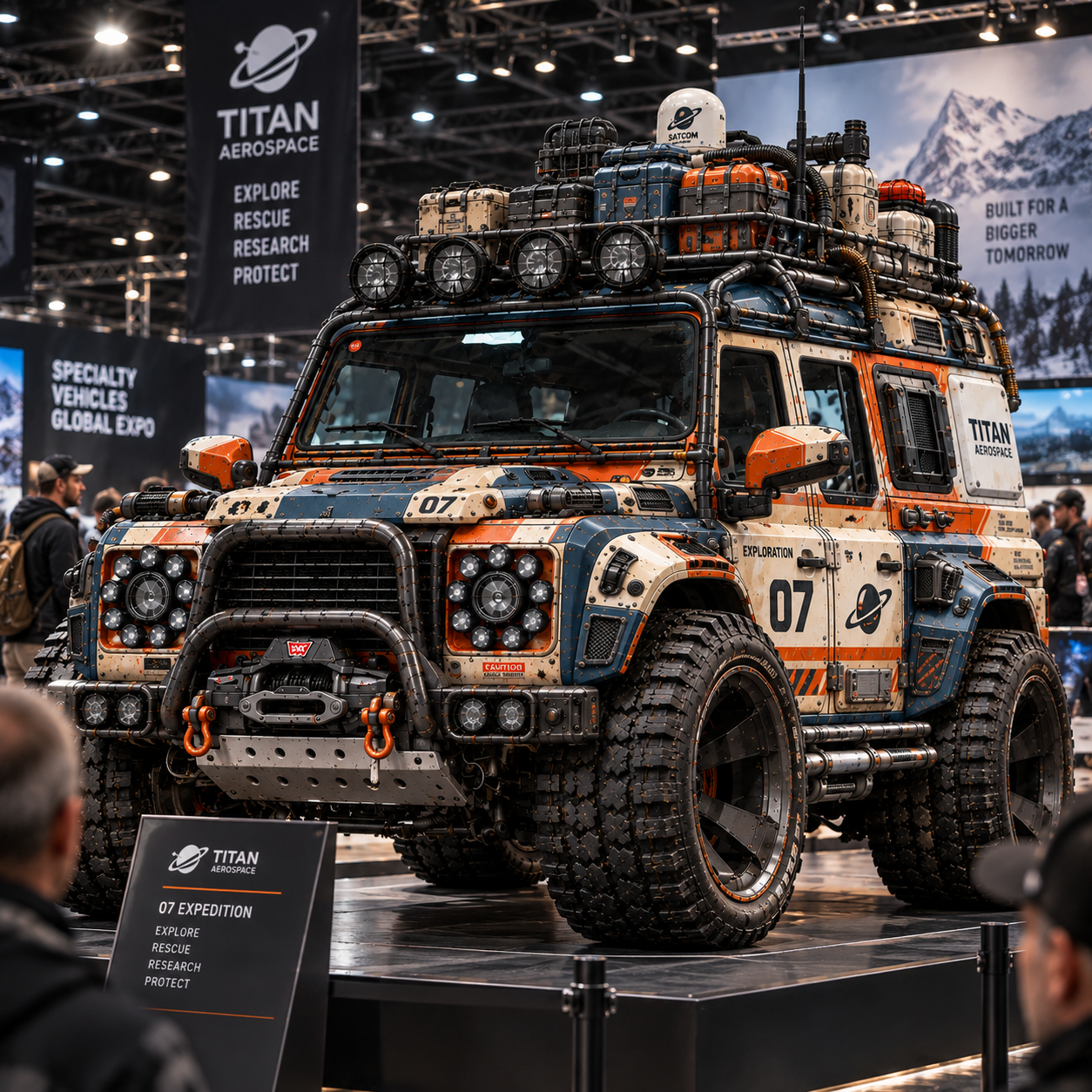
THE COMPLETE MACHINE
Built around the hard jobs.
On the show stand, you can take in the whole package. The broad body, huge tires, roof equipment, and exposed recovery hardware come together without the dust or snow. It’s the view that lets an enthusiast walk around the idea and see how every part contributes to its attitude.
The Tug began as a low-end-torque obsession and grew into a family of working-truck concepts. The VIP convoy gives it commanding presence. The rescue scenes give it purpose. The LR110 foundation keeps it recognizable through every version. That’s the PowerShow brief: take a truck we admire, turn up its capability-driven character, and give it a job worth getting excited about.
VIP CONVOY
Commanding presence. Convoy authority.
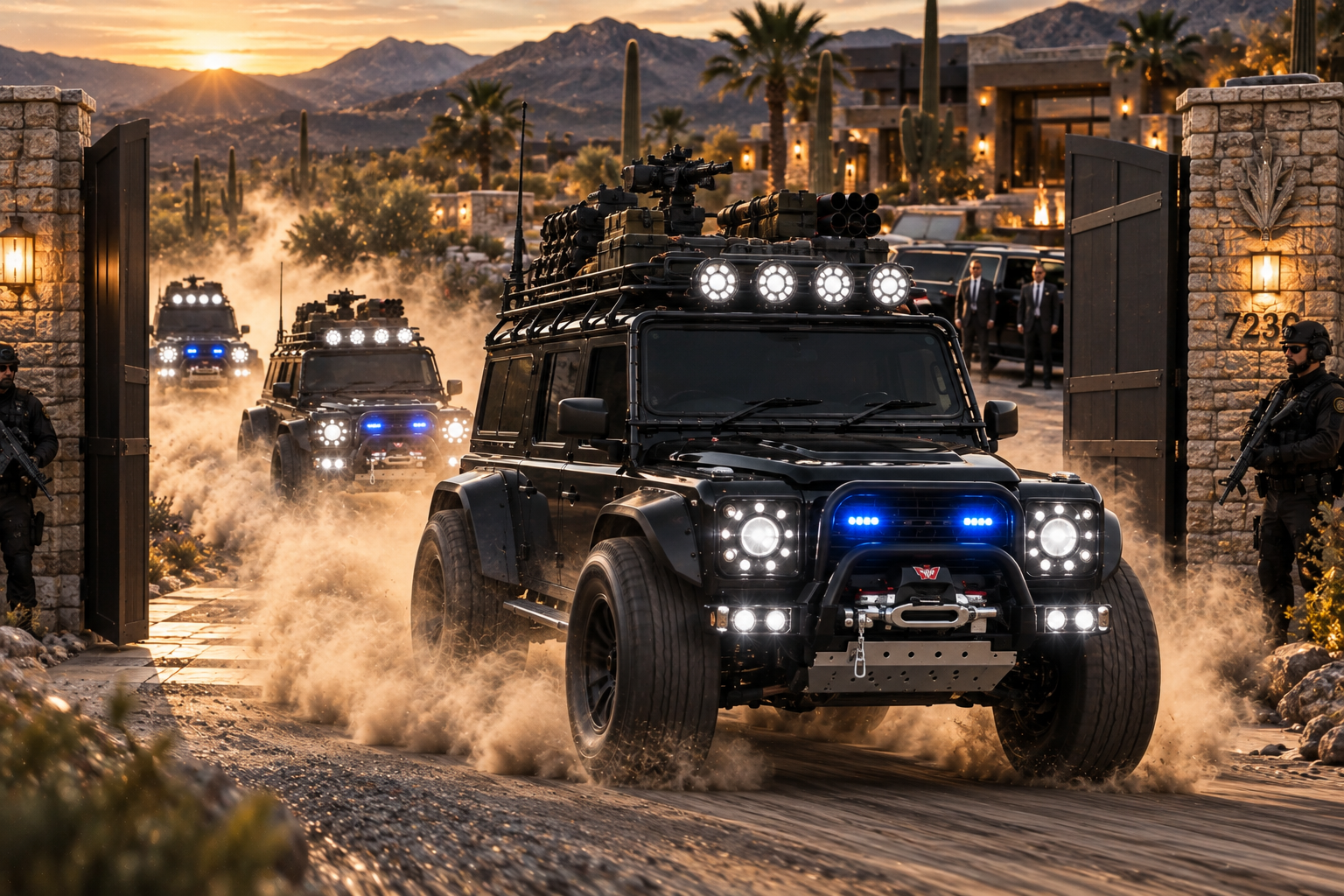
When the gates open, the Tug makes an entrance in reverse: the whole convoy is heading out. Dust lifts off the road, the trucks fill the frame, and the lead vehicle looks completely committed to the journey ahead. This is the side of the PowerShow LR110 Restomod we wanted to push hardest—confident, imposing, and prepared to keep a demanding trip moving.
The VIP convoy version puts that attitude into a disciplined group of machines. Dark bodywork, broad tires, a planted stance, and purposeful lighting give the trucks a shared identity. They look substantial enough to carry the people and equipment the assignment calls for, with the recovery-minded character that defines the Tug still front and center.
For us, the excitement is in that combination: executive transport with the shoulders of a working truck. A rough approach, a remote destination, a heavy load—the design is built around the idea of getting there with authority. It brings the Tug’s heavy-duty character into a completely different kind of assignment.
THE BEGINNING
Torque gave it a name.
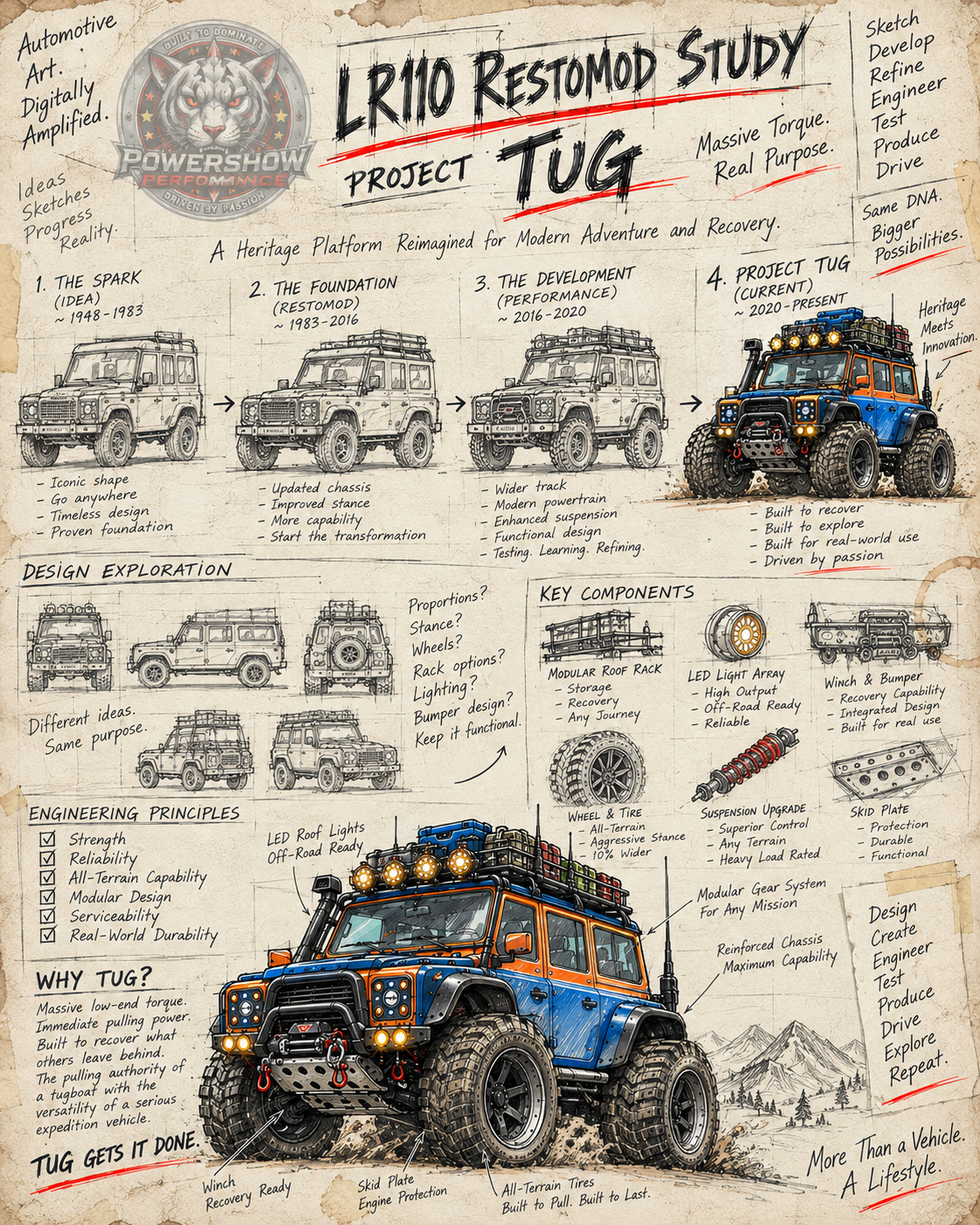
After all those assignments, here’s where the Tug began: a sketchbook and one question. What would an LR110 look like if we designed it around serious pulling power? Before the convoy, the snow, or the waterfront, that was the idea we kept coming back to.
The familiar silhouette gave us a starting point. Broader arches, larger tires, a tougher front end, and visible recovery equipment took it somewhere much more muscular. Each version grew out of a different job, but the name stayed right. Pull hard. Stay planted. Get the job moving. That’s the Tug.
THE ORIGINAL
The shape that started it all.
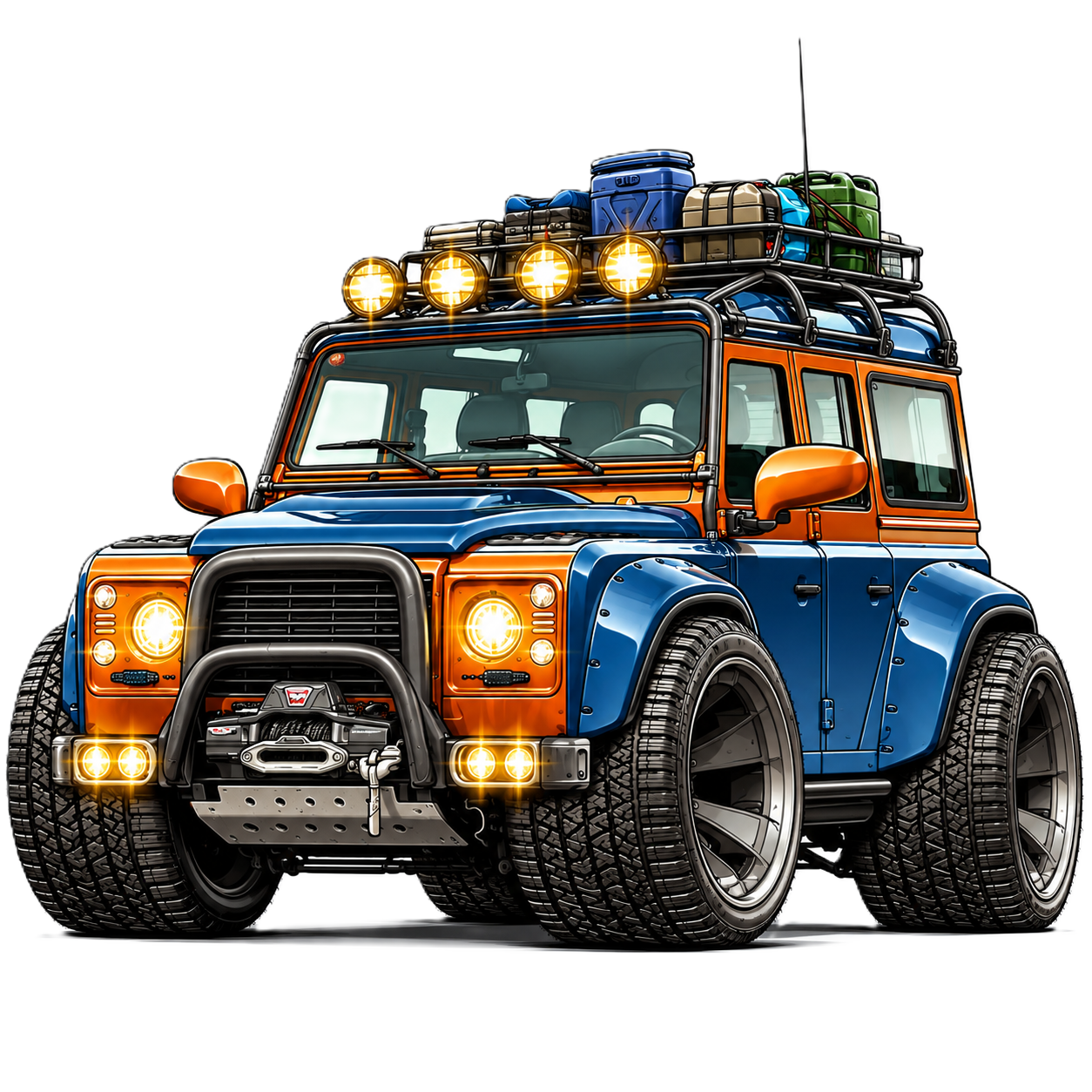
Here’s the original image behind the Tug’s design direction. The upright body, orange-and-blue finish, wide tires, loaded roof rack, and front winch already give it a strong working character. You can see the familiar LR110 proportions beneath the bigger stance.
That combination gave us plenty to work with. We took the recovery equipment and planted attitude further, developing the Tug around heavy pulling jobs and very different assignments. The marine, mountain, and convoy versions each have their own purpose, but this original image brings the whole series back to its starting point.