
AUDI COUPE QUATTRO CONCEPT
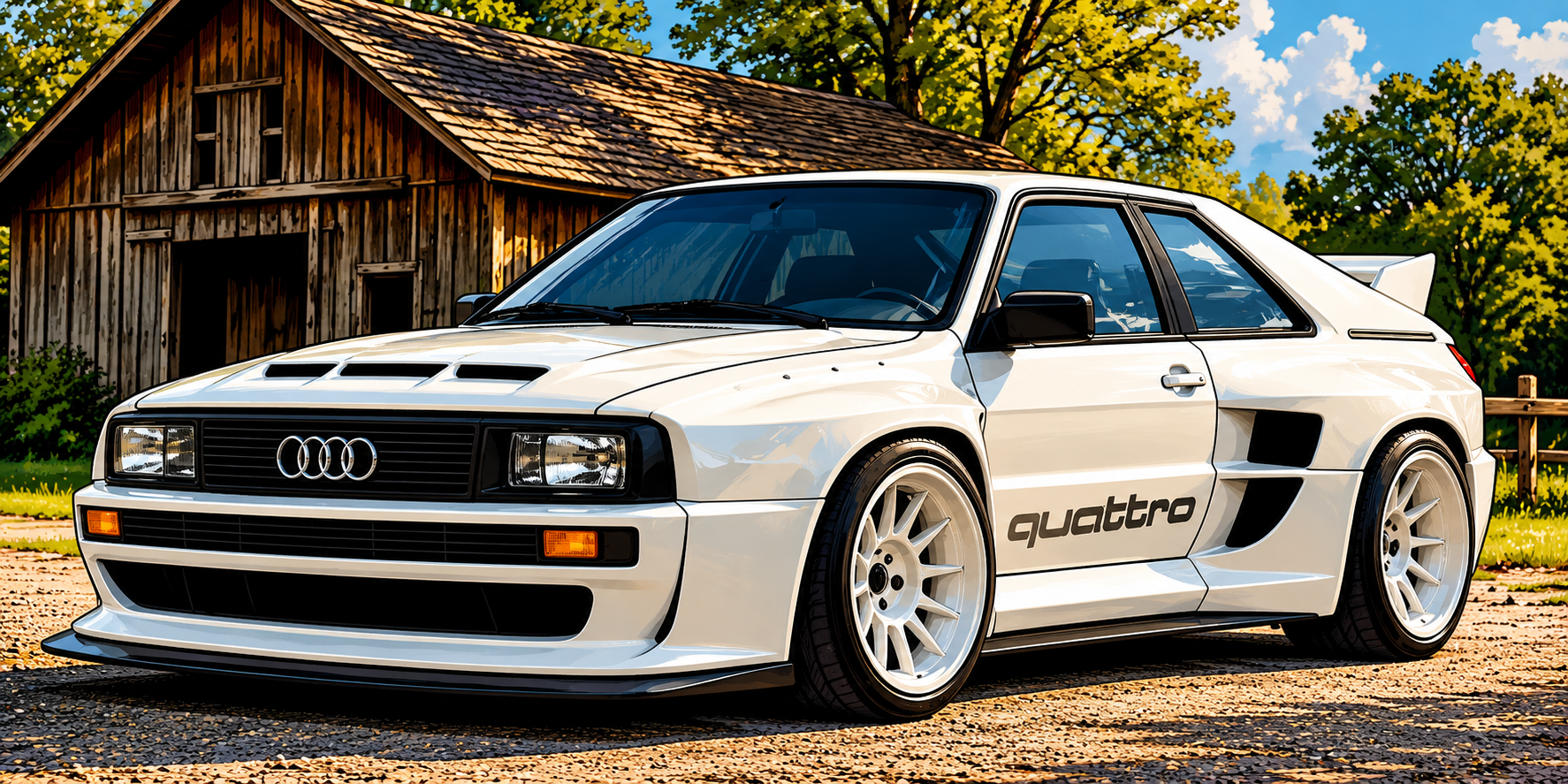
Coupe Quattro
Our enthusiasm for the Quattro starts with the way it brought traction and performance together. The compact coupe, purposeful stance, and unmistakable shape still make us stop and look. Its competition history gave us an even better reason to imagine where that design could go next.
Audi claimed the World Rally Championship manufacturers’ title in 1982 and again in 1984. Hannu Mikkola secured the drivers’ crown in 1983; Stig Blomqvist followed in 1984. Across the Group 4 and Group B eras, Audi recorded 23 world championship event victories.
The later Sport quattro competition machines carried that legacy to Pikes Peak. Michèle Mouton won overall in 1985, Bobby Unser in 1986, and Walter Röhrl in 1987. Röhrl’s 10:47.85 run set a new course record.
That combination of engineering, character, and competitive success got us excited about creating our own concept. We wanted to keep the coupe recognizable, then explore a wider stance, more ambitious aerodynamics, and a look shaped by the races we love. The original gave us the starting point—and plenty of reasons to keep sketching.
Motorsport history: Audi, “quattro in rallying.” Accomplishments refer to Audi’s historic competition cars.
THE BUILD
Start with the shape.
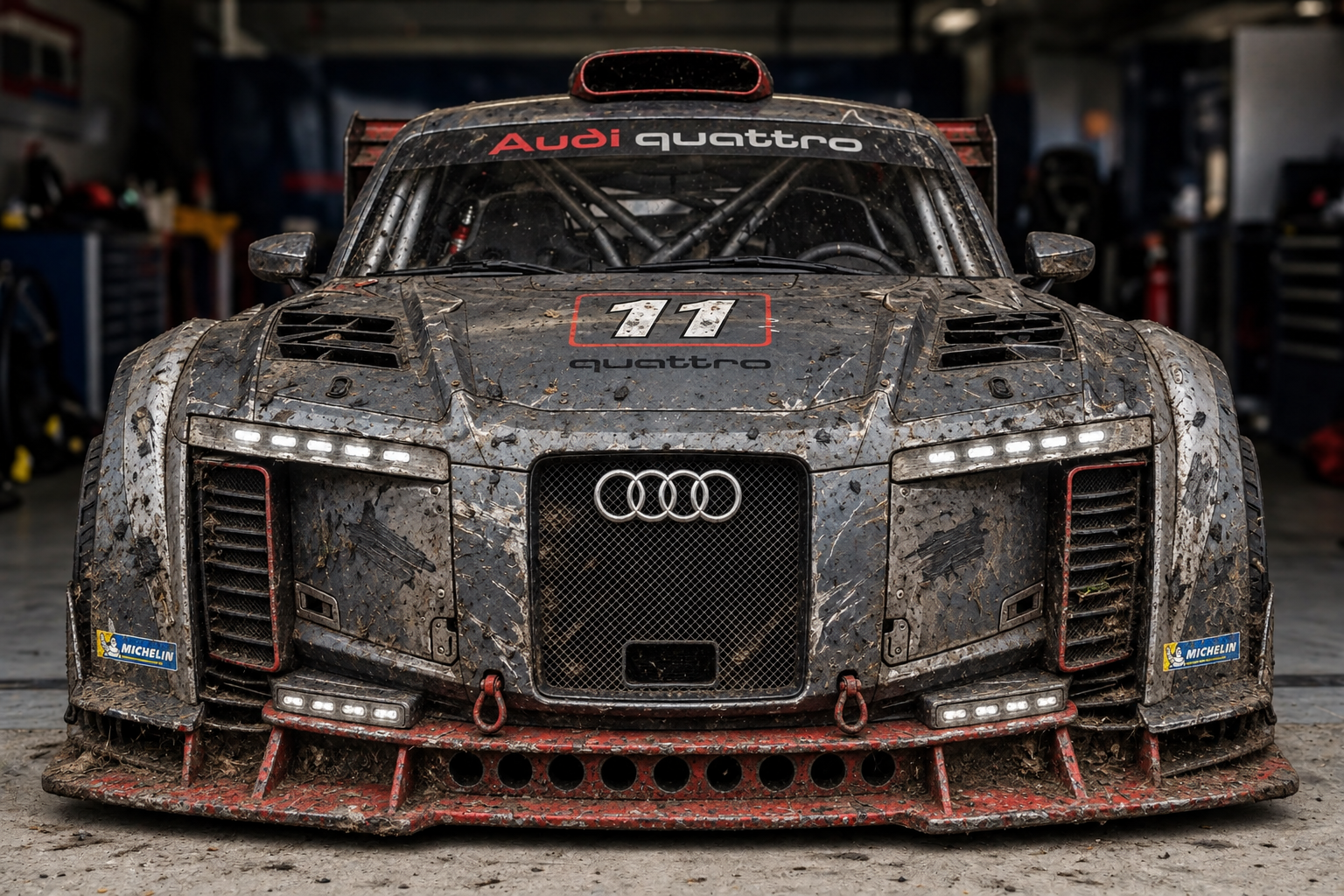
We started with the shape: a compact coupe, a clear roofline, and a stance that already suggested grip. Widening the body around the wheels gave us room for larger arches, deeper openings, and a lower front edge. The splitter, hood vents, and roof intake followed as we worked toward a more focused competition look.
As the design developed, we ended up with three versions: one for Grand Prix races, one for road races, and one for hill climbs. Each gave us a different way to explore the bodywork and aerodynamics, while keeping the same recognizable Quattro character.
All three share the benefit of quattro engineering as their foundation: an all-wheel-drive approach that puts traction and control at the center of the idea. In our design studies, that shared foundation ties the versions together, from fast circuits and demanding road courses to steep mountain climbs.
Graphite bodywork and red accents give the family a consistent identity. The fun was seeing how far we could take the original shape across three kinds of racing—and still have each version feel like a Quattro.
IN MOTION
See how the shape travels.
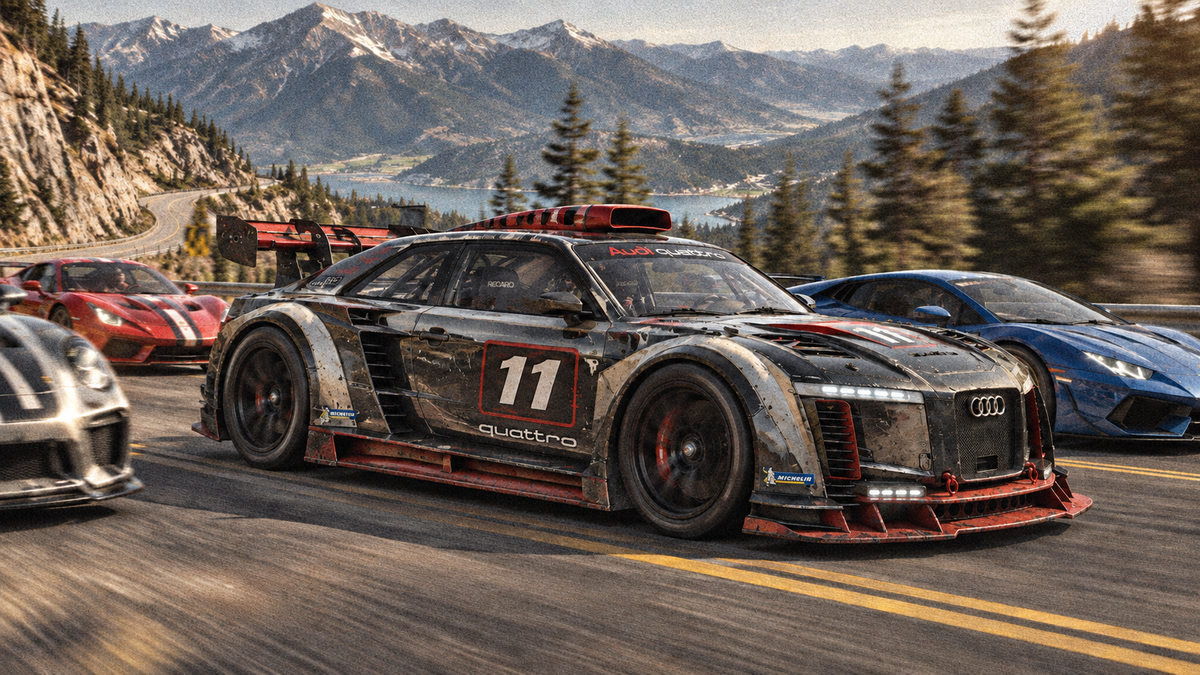
A workshop view tells us a lot about the front of the car. Putting it on an Alpine road lets us look at the design as a whole. The long bends and changing elevation are a natural setting for a concept inspired by all-wheel-drive competition.
Here, the relationship between the wide arches, side openings, and rear wing becomes easier to see. We wanted the car to look purposeful from a passing angle, with the main shapes working together rather than each detail asking for attention.
The number 00 gives this scene a testing-day feel. It’s a chance to imagine the coupe out in the world and see whether the design still reads clearly away from the workshop.
THE SUMMIT SCENE
Let the climb guide the idea.
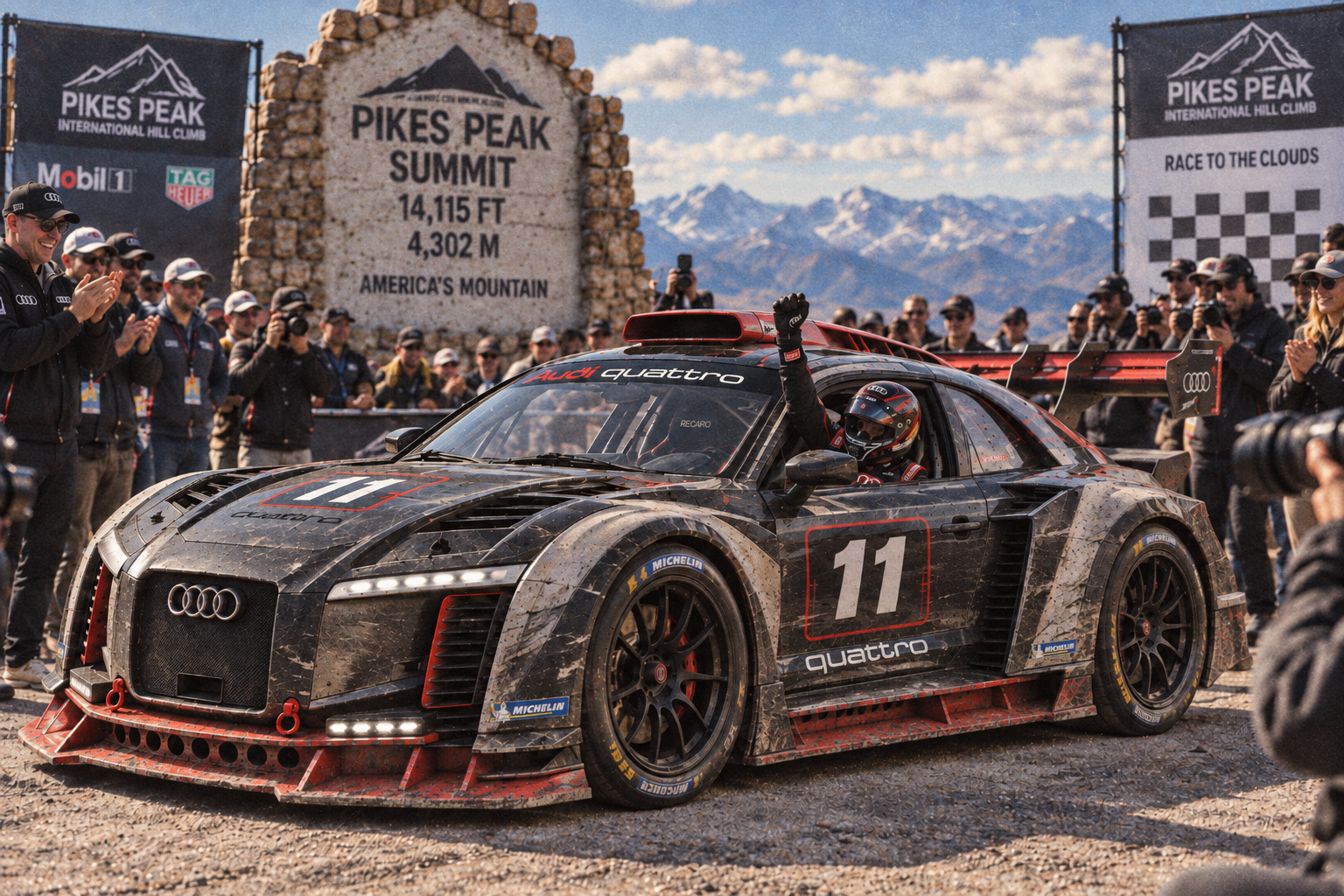
Pikes Peak helped give the concept a direction. Audi’s history on the mountain is part of what makes the Quattro such an exciting reference, and it encouraged us to think beyond a road-car makeover.
We leaned into the visual language of a hillclimb car: prominent cooling openings, a deep front splitter, broad tires, and a large rear wing. Each feature was chosen to make the performance brief visible in the artwork.
The summit scene imagines where that idea could lead. It gives the design a destination and a sense of occasion, rather than simply another backdrop.
THE CONCOURS
Take a step back.
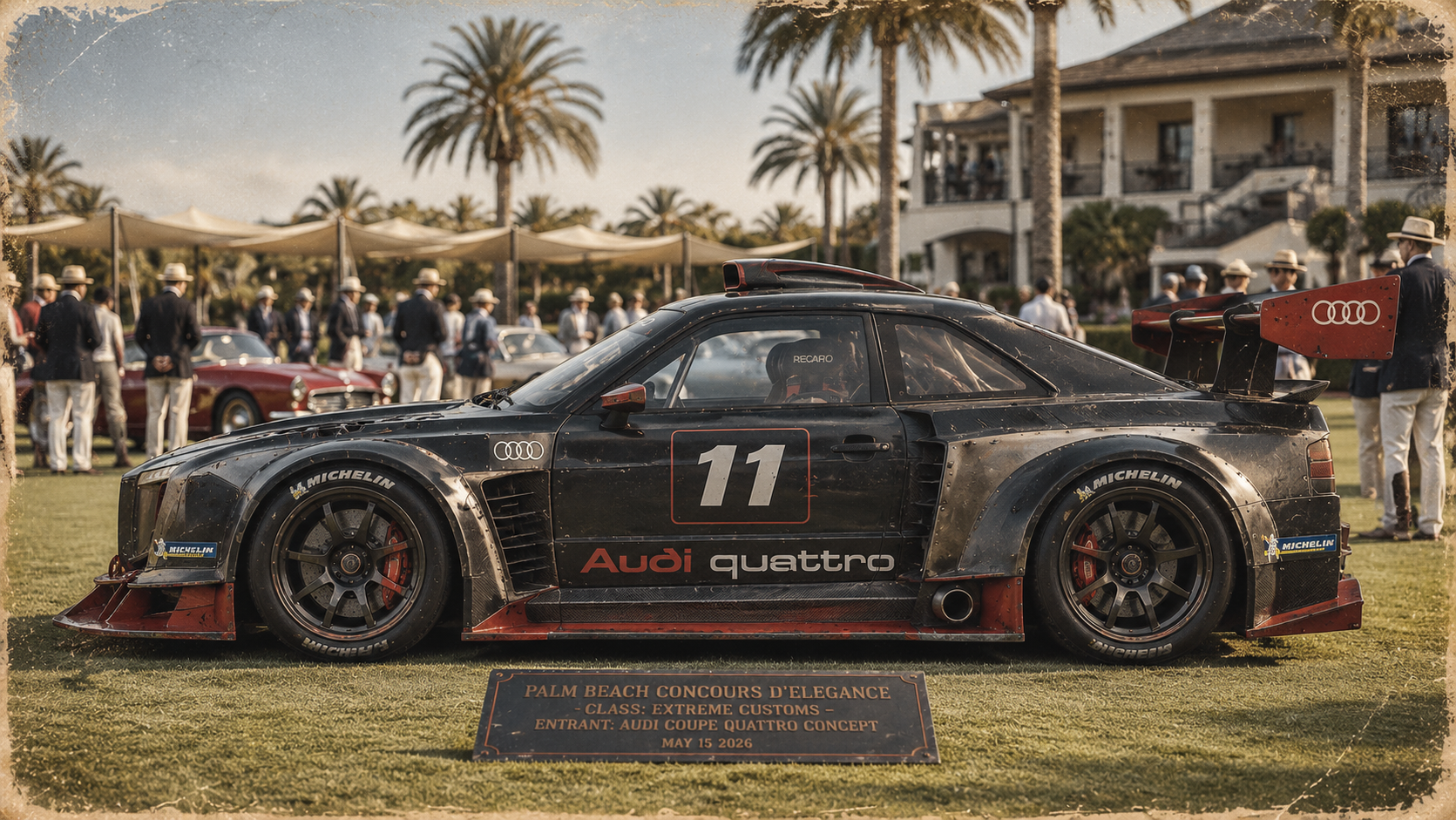
The concours setting lets us slow down and look at the profile. With the car standing still, the roofline, wheel placement, and balance between the front splitter and rear wing are all on display.
We wanted the original coupe to remain recognizable underneath the competition treatment. The broad bodywork adds drama, but the familiar cabin shape keeps a connection to the car that started the project.
Among the palms and other cars, the concept takes on a different character. The setting shows how a racing-inspired design can also invite a closer look at its proportions and small details.
THE DEFINING VIEW
Bring the pieces together.
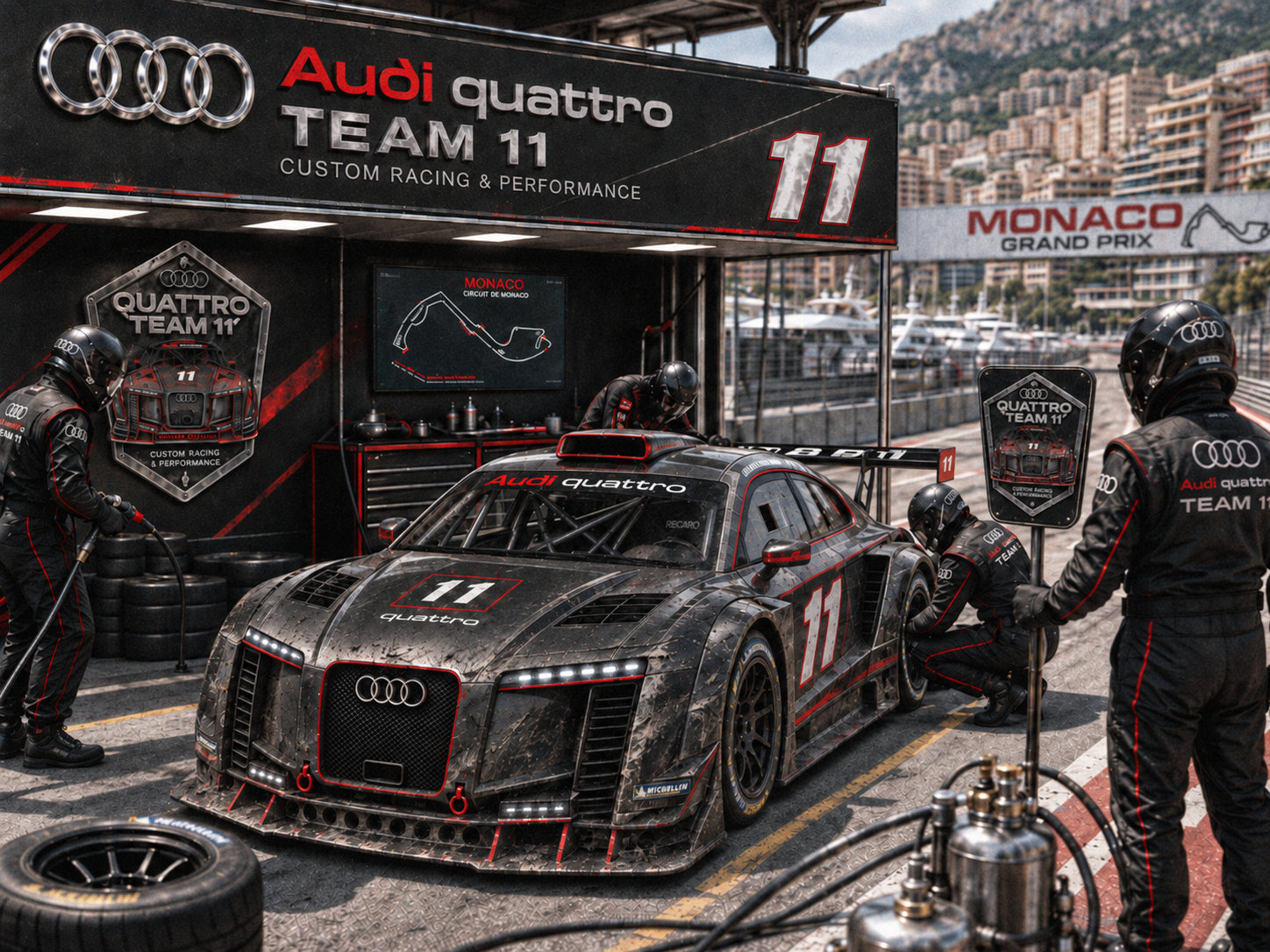
The pit-garage scene brings the concept back to its performance roots. It pulls the broad stance, cooling openings, red aero accents, and graphite bodywork into one view, with the surrounding activity giving the car a sense of scale.
By this point, the design has a consistent identity across the workshop, mountain road, summit, and concours scenes. The lighting and setting change, but the coupe’s main shapes stay easy to recognize.
That consistency matters. We wanted a car you could pick out across the series, with enough detail to reward a second look.
PowerShow concept artwork. The scenes and design studies express a creative vision.
THE DESIGN STUDY
Look closer at the thinking.
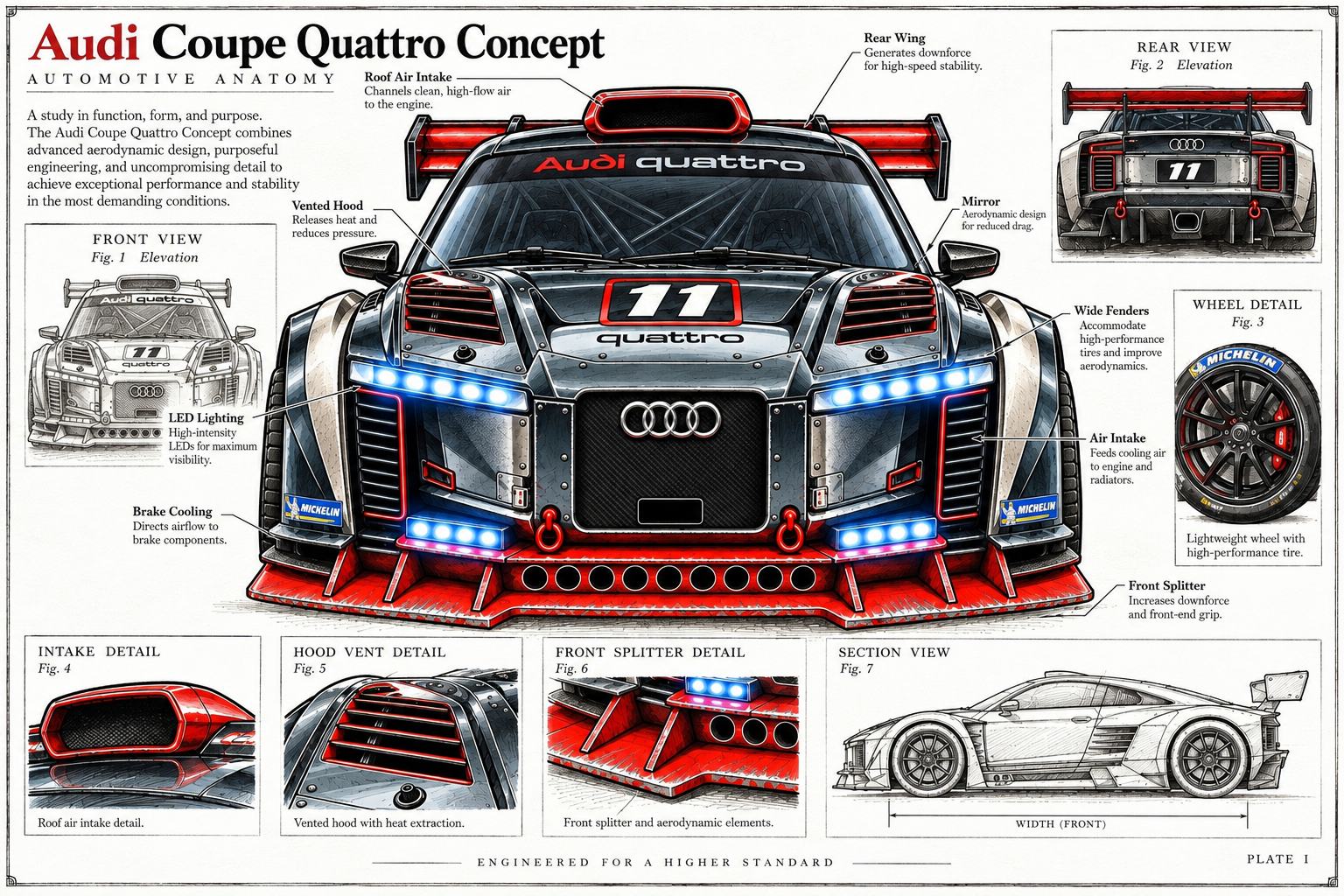
The design board brings the smaller studies together. Front and rear views help explain the overall shape, while the wheel and aero details show how we approached individual parts.
The openings suggest paths for cooling air. The hood vents, splitter, and wing draw from competition-car design, while the wide fenders give the wheels a strong place in the composition. Looking at these pieces together helps explain why the finished coupe has the stance it does.
These are visual design intentions rather than tested engineering specifications. The board is a way to share the thinking behind the artwork and make the journey from the original Quattro to the concept easier to follow.
TEAM 11
Give the concept its own identity.
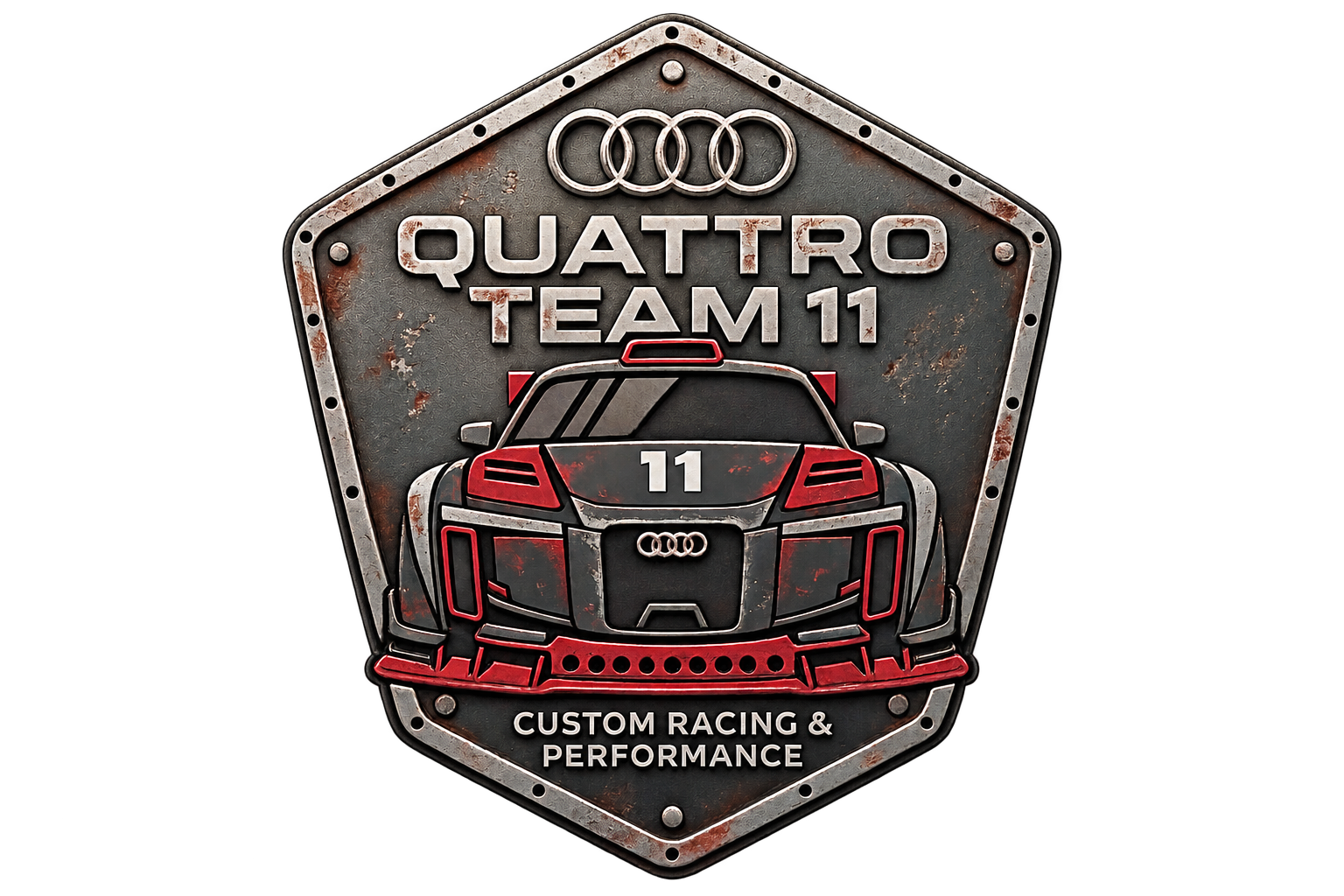
The Team 11 emblem brings the project’s colors and shapes into a smaller piece of artwork. The coupe, Audi rings, and racing number connect it to the scenes above, while the red and graphite palette keeps it part of the same family.
We began with a Quattro we admired and explored how its competition heritage could inspire a more extreme coupe. The result is this PowerShow design study: familiar enough to show where it came from, and bold enough to have an identity of its own.