
Packed before sunrise. Ready for the coast, the climb, and a longer stay. Adventure Seeker follows the experiences that make a custom truck worth building.
Out before the balloons rise

At the balloon launch, the orange and blue truck stands among baskets, crews, and the first departures of the morning. Its cool-white lamps catch the packed roof cases and the hardware beneath the front bumper. Rob has arrived with enough equipment to spend the day out, wherever the next stretch leads.

That is the point of Adventure Seeker: a four-wheel build that makes room for more than the drive. Shelter, supplies, recovery gear, and tools stay organized, so an early start can become a coastal stop or a weekend on the trails without another trip home to pack.

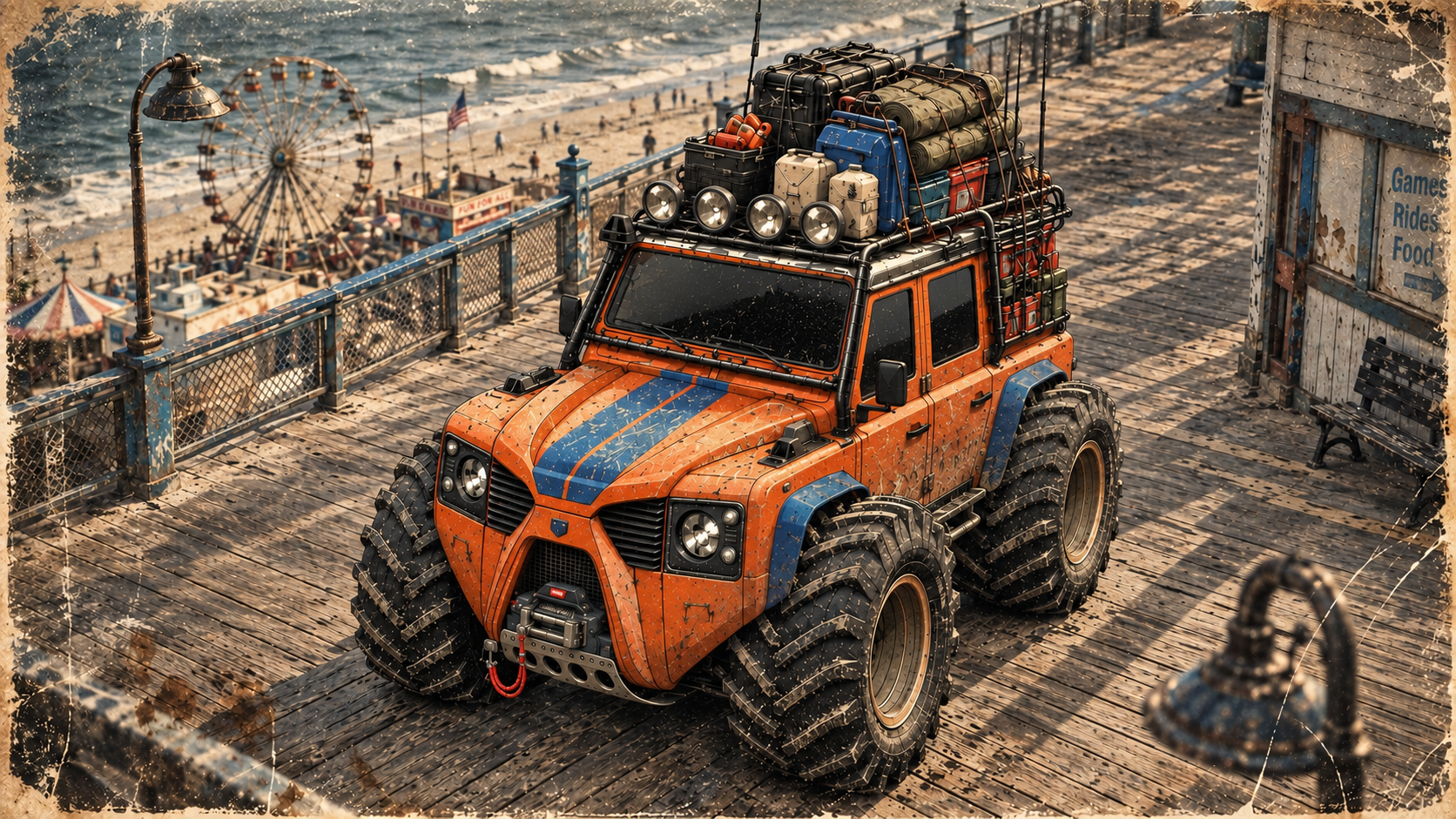
The boardwalk still marks mile zero. From there, the truck moves between quiet stops and demanding ground. The changing scenery gives the equipment a purpose—and Rob a reason to keep going.

01 · Mile zero – A coastal starting point for a truck equipped to go further.
Taking it into the mountains

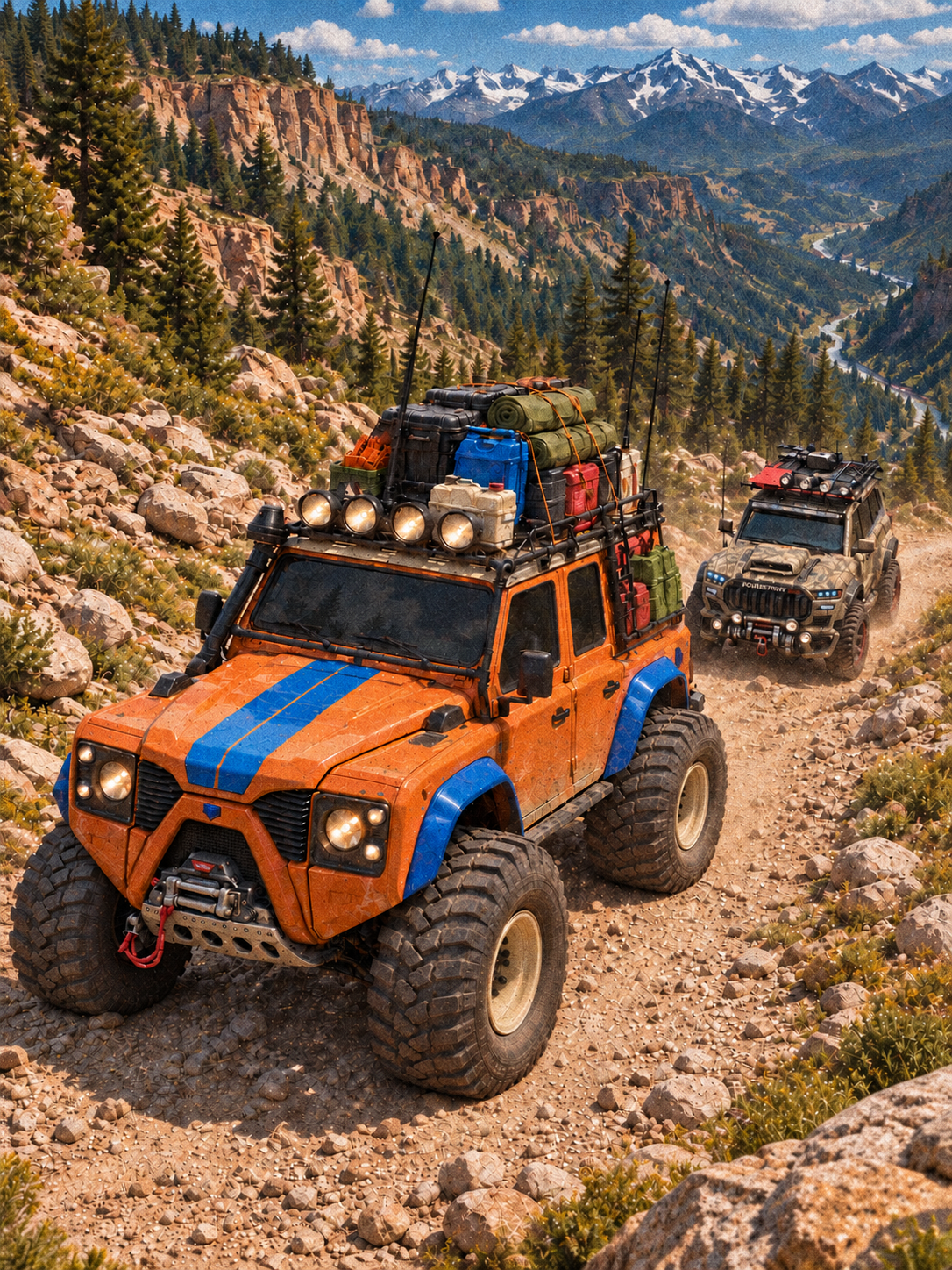
The mountain run changes the pace immediately. Beside the blue expedition rig, the orange truck works through snow and broken ground with its lights on and its equipment secured overhead. There is no smooth stretch to settle into. Each bend brings a different surface.

From the driver’s seat, the job is to read the track: where the tires will land, how deep the ruts are, and whether there is room to pass. Rob keeps the inputs measured and watches the truck ahead rather than trying to turn every section into a charge.

Traveling with another vehicle adds company and a second set of eyes. Stops become a chance to compare the route, check the loads, and decide whether to continue or find another way through.

02 · Into the mountains – The orange and blue rigs travel together on a snowy mountain route.
Coastal tracks and a place to stop

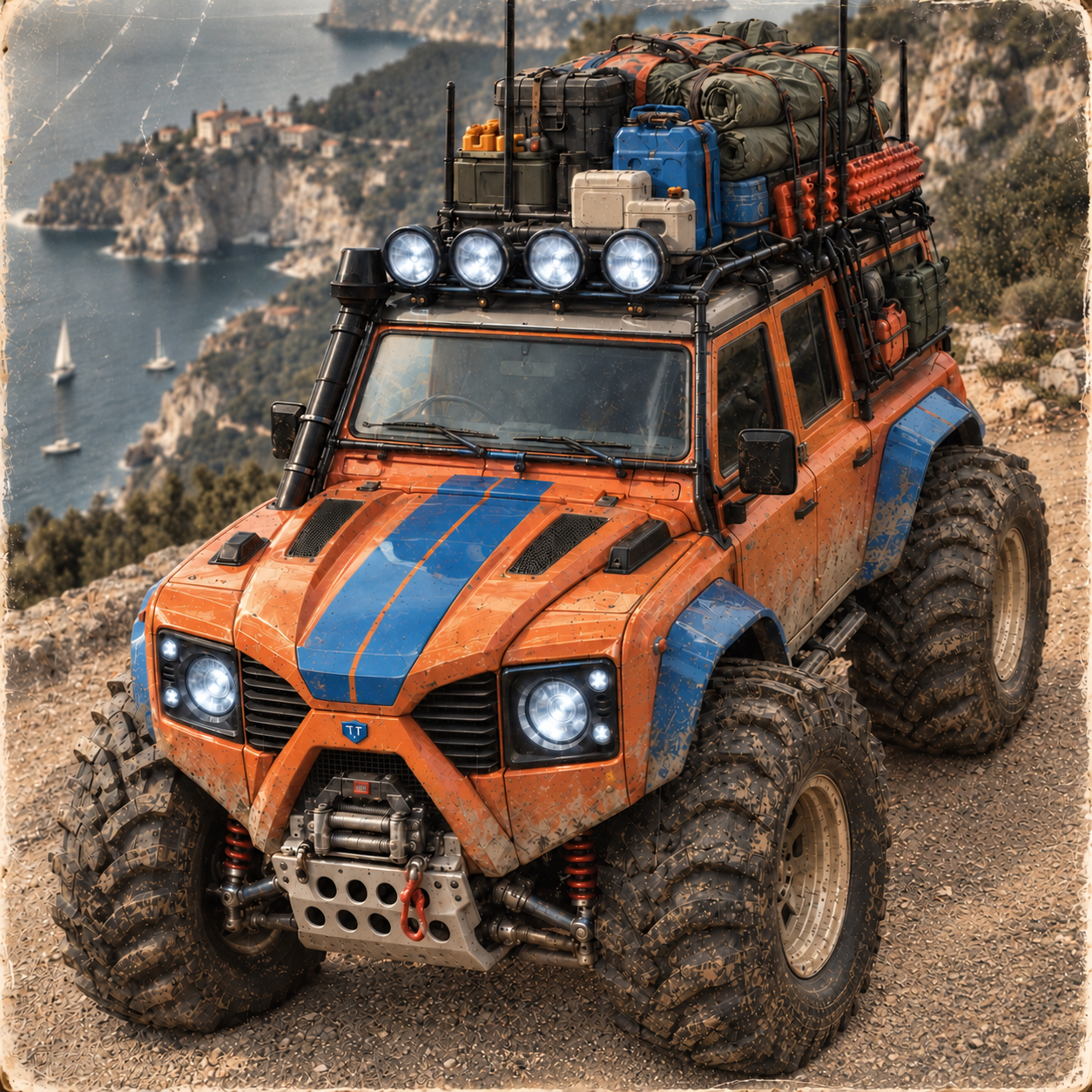
Above the coast, the truck becomes a way to reach somewhere worth spending time. The view opens over the sea, the road narrows, and the roof load makes sense: supplies for a stop that can last longer than a photograph.

The broad tires, visible suspension, front winch, and lower protection give the build its working character. On uneven ground, Rob pays attention to wheel placement and clearance. The vehicle’s size is part of the experience too; a narrow track calls for patience and room to turn around.

At the overlook, the engine can go quiet. Unpacking a case, making a drink, and looking out over the water are as much a part of using the truck as the drive that got it there.

03 · Above the coast · A loaded truck, a narrow track, and the sea below.
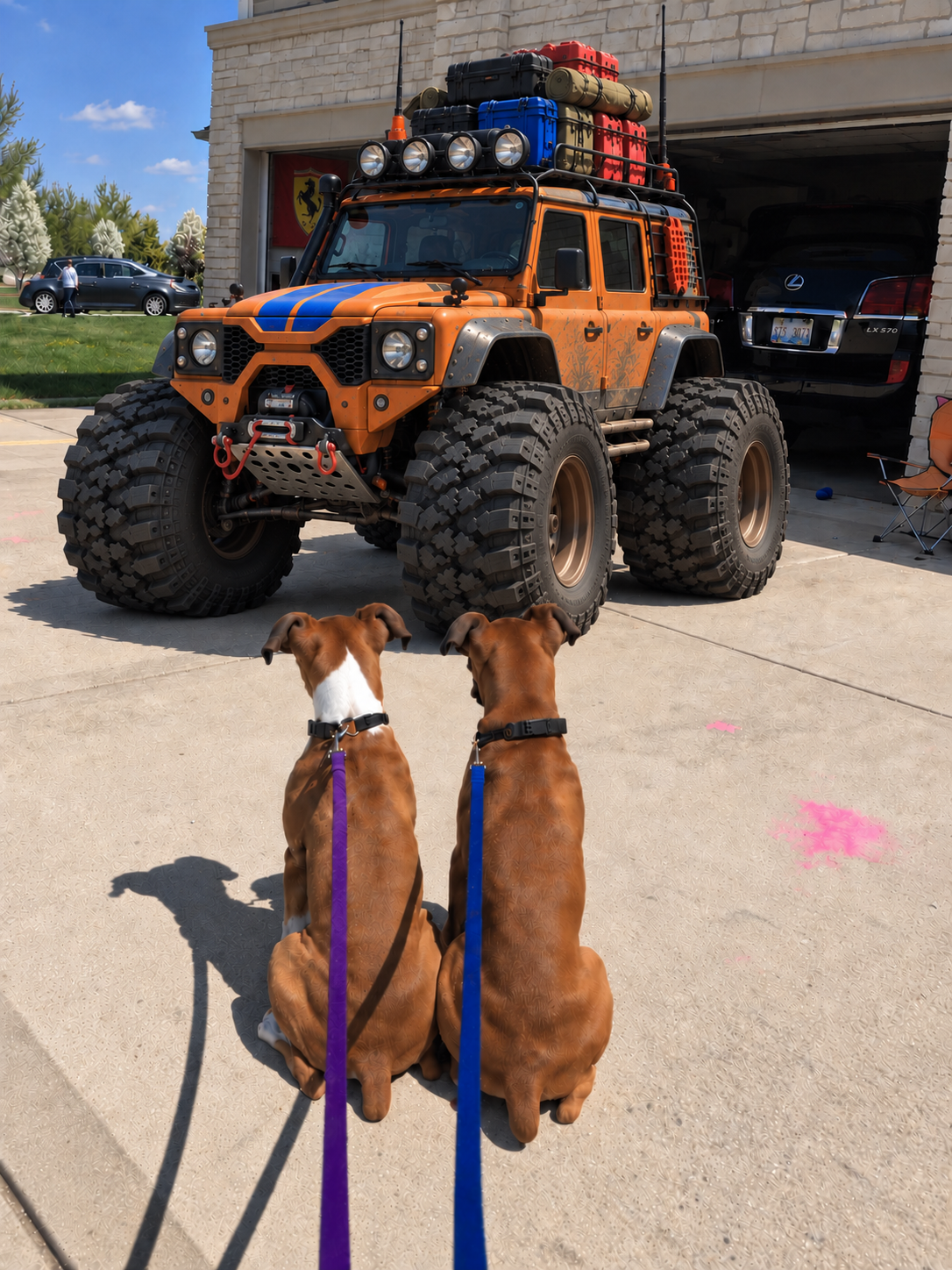
04 · Home between runs · Two dogs wait beside the truck between outings.
Living with the loadout

The driveway scene shows the other side of expedition use. Two dogs wait beside the truck while the gear is checked, cleaned, and put back where it belongs. A well-packed vehicle still needs attention between outings.

Rob keeps the heavier supplies low and uses the roof for the bulkier equipment. He works through the cases after a trip: what was used, what stayed buried, and what needs replacing. Access matters when hands are cold or everything is muddy.

The goal is a repeatable routine. Packing should make the next departure easier, with the equipment secure and the essentials within reach.

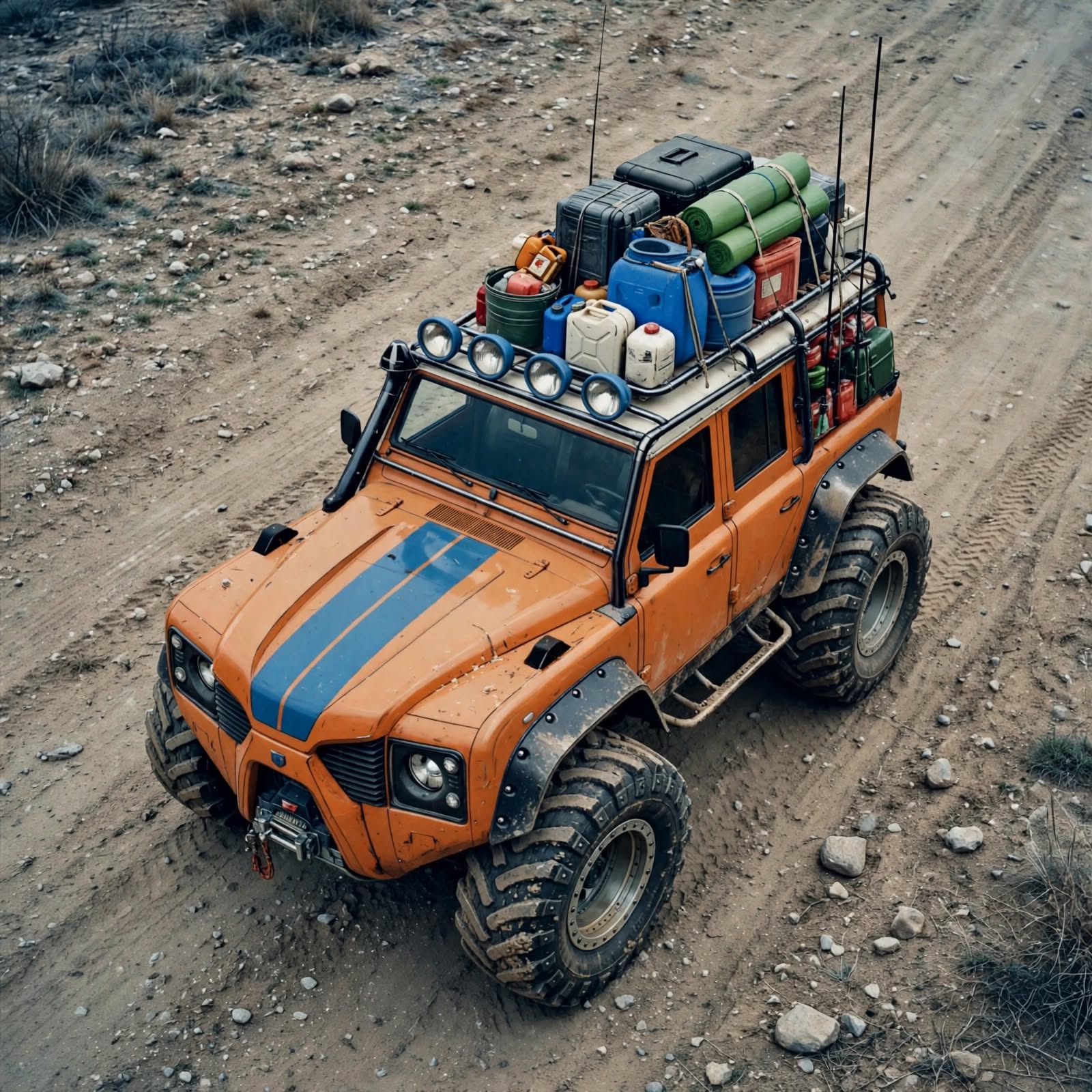
05 · The loaded trail test – The high view shows the roof load and the truck’s stance on rough ground.
What rough ground feels like

The high view of the loaded truck makes the weight and scale of the build clear. On rocky tracks, the drive is slower and more involved than it looks from outside. The body moves, the tires follow different heights, and loose equipment makes itself heard quickly.

Rob listens for a new rattle and watches how the load behaves. He stops to check straps and clearances rather than waiting for something to work loose. A short trail section can take time when each wheel needs a deliberate line.

That is part of the appeal. The driver is involved in the whole journey, from choosing the route to sorting the equipment afterward.

A hard day at the mud run

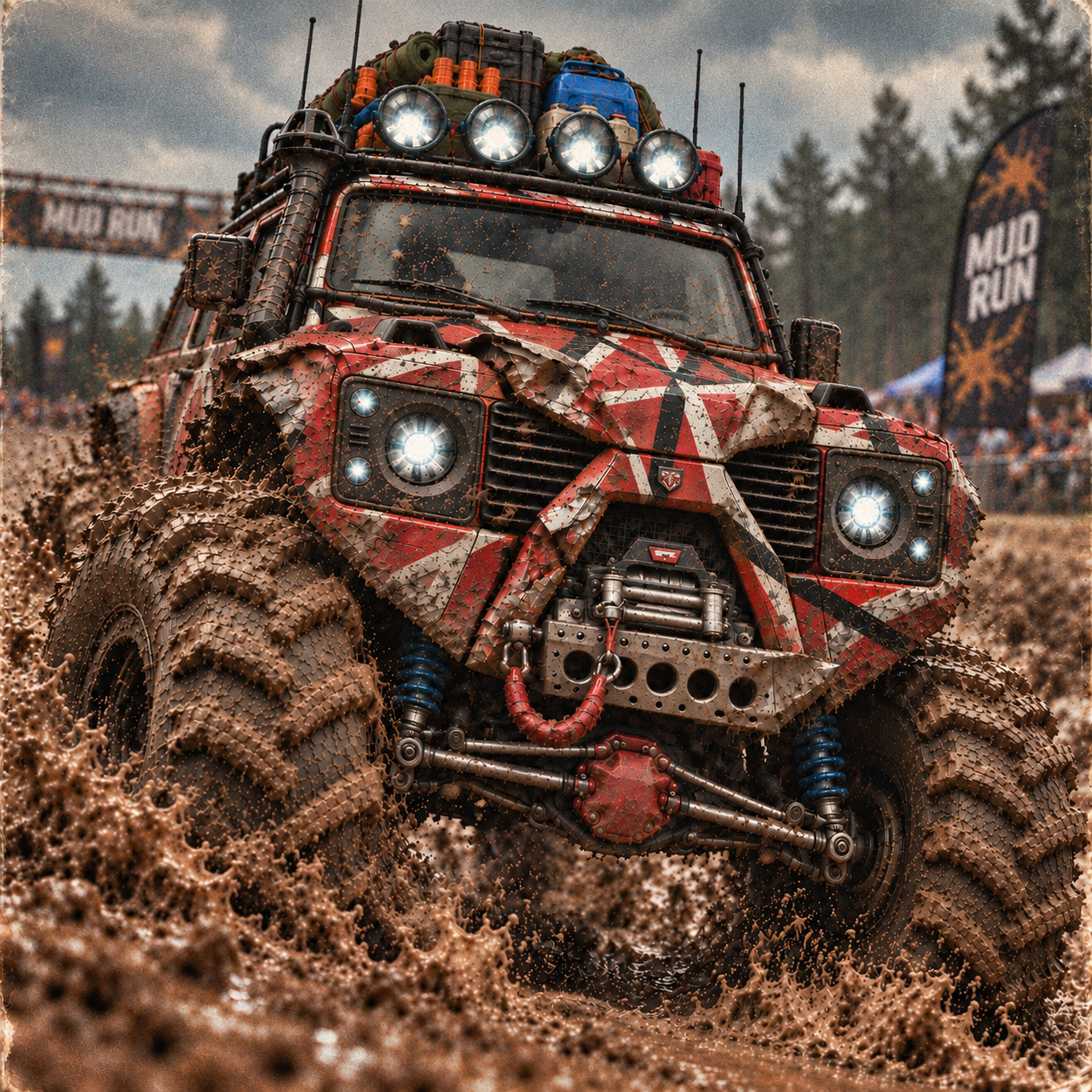
The Frankenstrat treatment gives the truck a different attitude for the mud course. Red, white, and black stripes replace the familiar orange and blue, while the winch, roof equipment, skid plate, and oversized tires remain recognizable.

The scene is loud and busy: other trucks, spectators, deep ruts, and mud thrown up around the wheels. The battered hood and fenders show how demanding the outing has been. This is the build at its messiest, with the hardware exposed and the bodywork carrying the evidence.

Afterward comes the less photogenic work. Rob washes it down, checks the steering and suspension, inspects the recovery equipment, and deals with the damaged panels before another run. Using the truck includes looking after it.

The mud run – Frankenstrat colors, deep ruts, and bodywork that has taken a hit.
The drive, the stop, and getting ready to do it again.

Winter with the PowerShow fleet

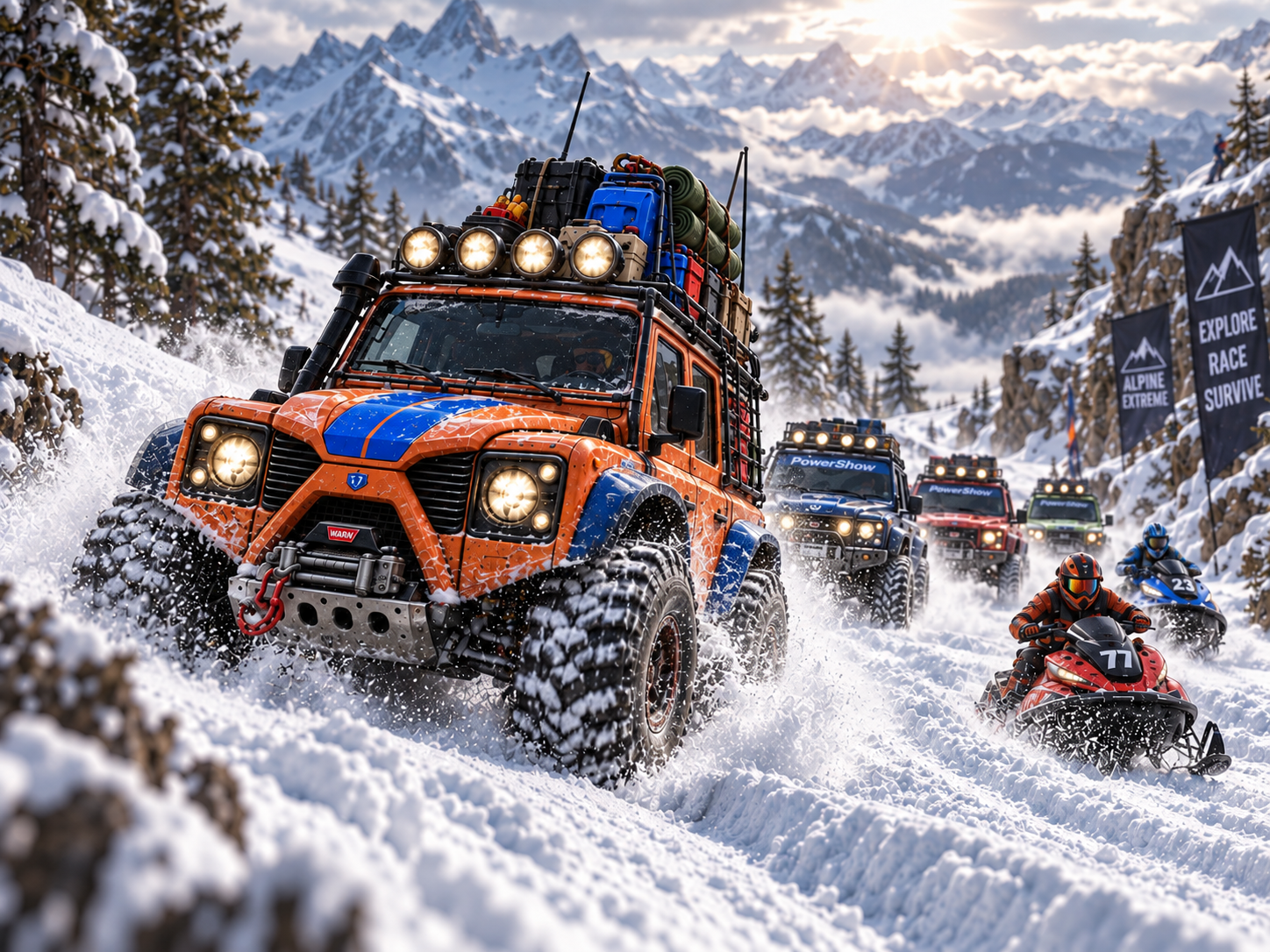
The winter images show a different use for the same expedition setup. The orange truck travels with other off-road vehicles and snowmobiles, loaded for a day on the mountain rather than a quiet coastal stop.

Snow changes the feel of every input. Steering, braking, and throttle need more care, and visibility can disappear behind spray from the tires. Warm-looking auxiliary lights stand out against the white landscape, while the roof cases keep the day’s equipment together.

For Rob, a group outing brings another kind of enjoyment: the shared stops, the different machines, and the conversation after a difficult section. The route is only one part of the day.

06 · Winter fleet run · Trucks and snowmobiles share a snowy mountain outing.
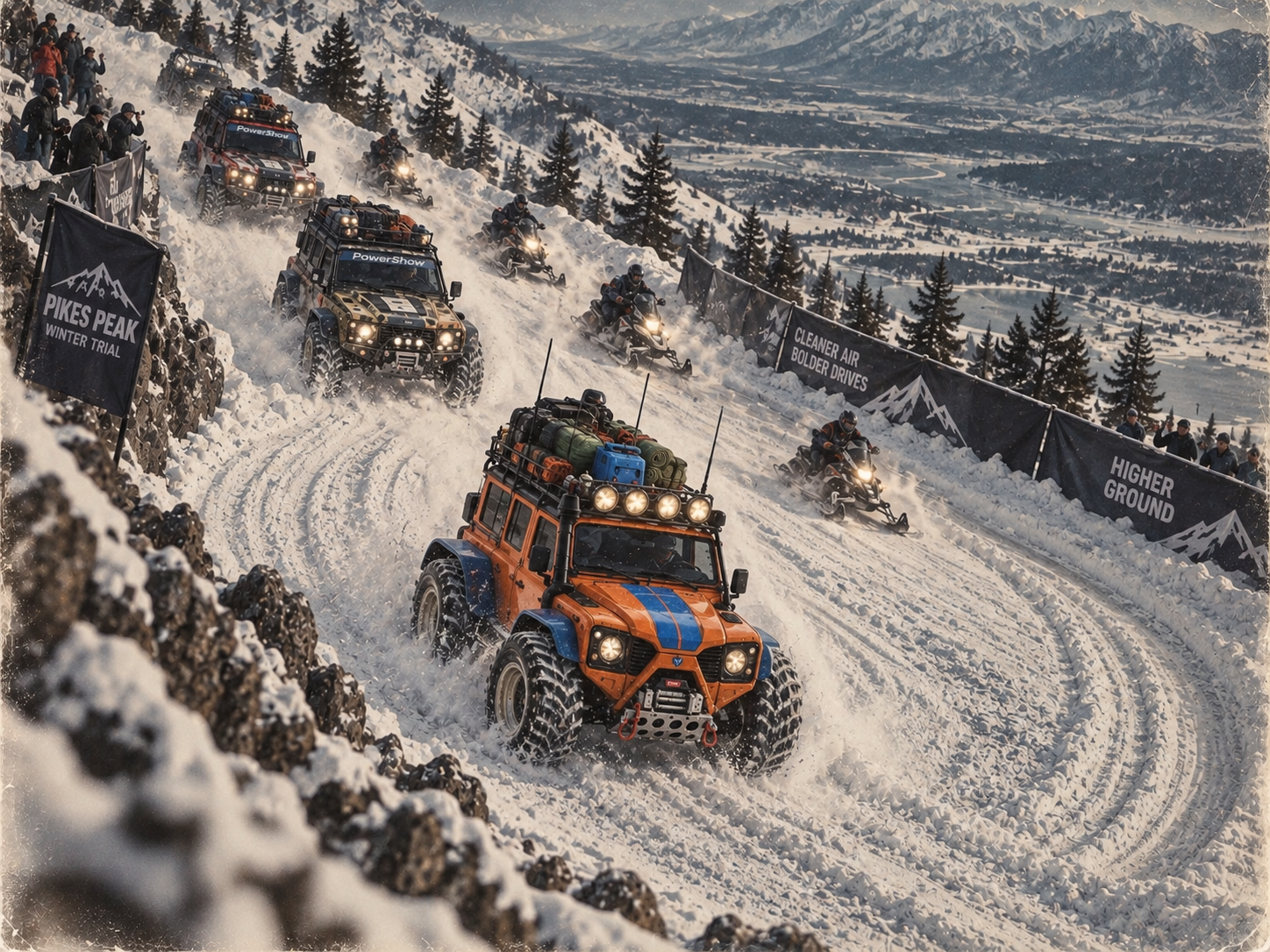
07 · The winter trial · A high view of the convoy rounding the mountain bend.
One loadout, different conditions

The second winter view follows the truck around a snow-covered mountain bend, with vehicles and snowmobiles spread along the course behind it. Spectators watch from the edge. Seen from above, the scene shows how much space the group occupies and how quickly the track can change.

The experience is about staying attentive while enjoying the setting. Rob leaves room, reads the next bend, and keeps the load secure. The equipment that was useful on a coastal weekend now belongs to a cold-weather outing.

From the balloon field to the snowy course, the useful equipment stays familiar. The tires find purchase, the suspension follows the ground, and the cases carry what the outing calls for. Each trip teaches Rob what to keep, what to move, and what to leave behind.

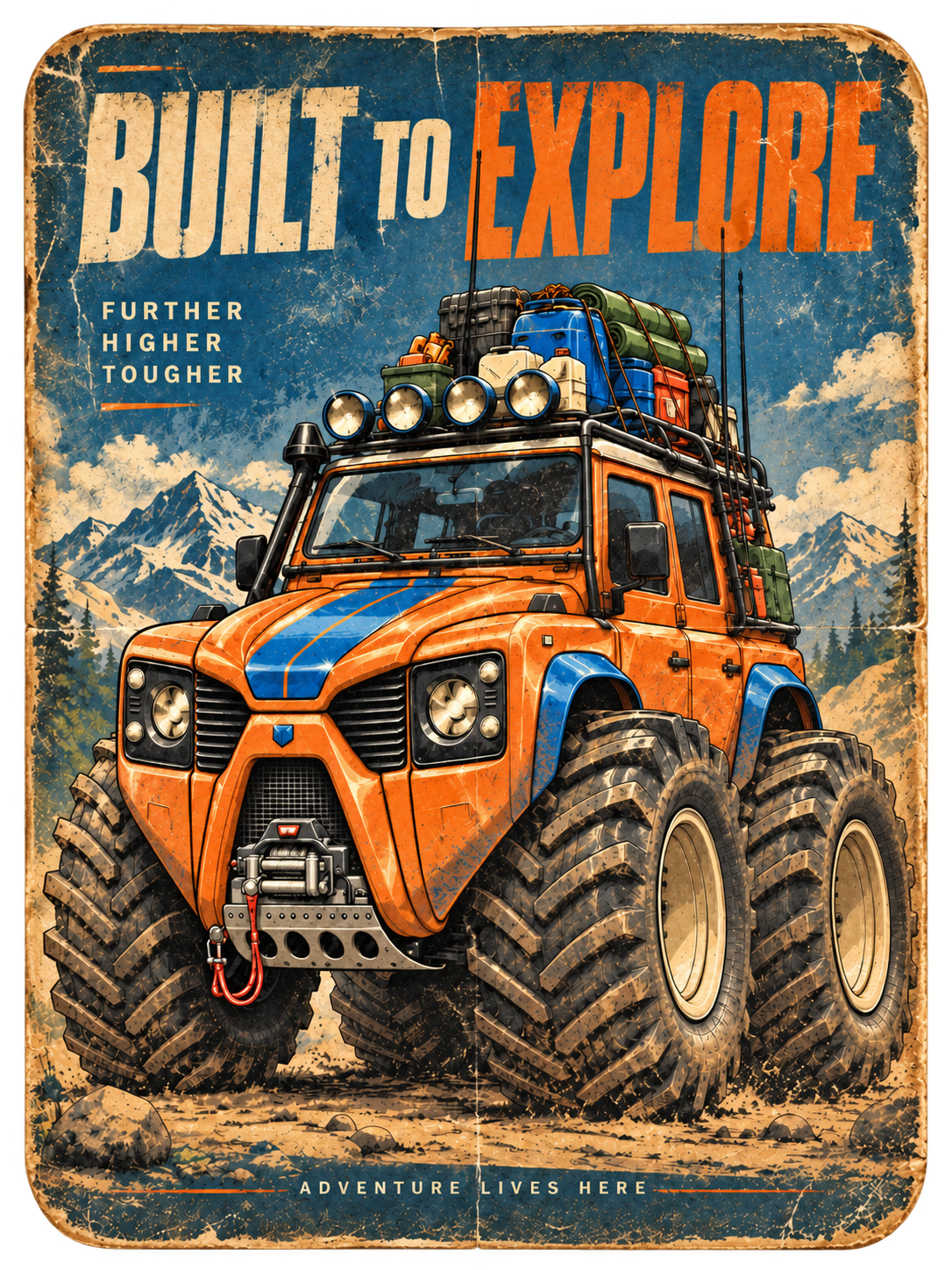
08 · Built to explore – A rally poster for the truck and the experiences behind the build.

Further, higher, tougher

The closing poster brings those outings together: the loaded roof, broad tires, front recovery hardware, and mountains beyond. “Built to Explore” gives the truck a clear purpose. It is there to carry the gear, reach the stop, and make the return trip.

Back home, Rob cleans the underbody, dries the wet equipment, checks the suspension, and restocks the cases. The dogs return to their spot beside the truck. Getting ready again is part of the experience, whether the next plan is a sunrise launch, a coastal weekend, or another day with the fleet.

Coast, rock, mud, or snow—the build earns its place through use. The best part is having it ready when another route or another reason to get out comes along.

Built to be driven. Packed to stay longer.

Build File

Vehicle
PowerShow Adventure Seeker

Driver
Rob

Uses
Balloon launch visits · coastal travel · trails · mud runs · winter events

Traction
Four oversized tires

Recovery
Front winch · lower-body protection

Loadout
Cases · shelter · supplies · recovery gear

Routine
Drive · unpack · inspect · prepare